7 Keys to Daycare Cleaning: Essential Practices Every Childcare Center Needs
Daycare cleaning isn’t like cleaning an office or a home. Children touch everything, put objects in their mouths, and share germs freely. A sick child today means five sick children tomorrow—and frustrated parents questioning your facility’s cleanliness.
The difference between daycares that struggle with constant illness outbreaks and those that maintain healthy environments comes down to understanding and applying the fundamental keys to effective childcare sanitation.
Here are the seven essential keys every daycare must master.
Key #1: Use Child-Safe Cleaning Products
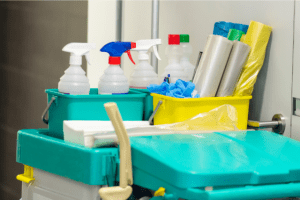
The products you use matter as much as how often you clean. Children are more vulnerable to chemical exposure than adults—they breathe faster, have thinner skin, and frequently touch surfaces then put their hands in their mouths.
What to look for:
- EPA-registered disinfectants that are proven effective against common daycare pathogens
- EPA Safer Choice certified products when possible
- Fragrance-free or lightly scented formulas to avoid respiratory irritation
- Non-toxic when dry so children can safely touch treated surfaces
What to avoid:
- Harsh bleach solutions in high concentrations
- Aerosol sprays that children can inhale
- Products with strong chemical odors
- Anything not designed for use around children
Pro tip: Always check the product label for “dwell time” or “contact time”—this is how long the surface must stay wet for the disinfectant to actually work. Wiping immediately after spraying does NOT disinfect.
Key #2: Focus on High-Touch Surfaces
Not all surfaces carry equal risk. High-touch surfaces—the places many hands contact throughout the day—are where germs concentrate and spread.
Critical high-touch surfaces in daycares:
- Door handles and push plates
- Light switches
- Faucet handles
- Toilet flush levers
- Cabinet pulls and drawer handles
- Chair backs and table edges
- Stair railings and safety gates
- Crib rails
- Toy bin edges
- Cubby shelves
- Shared learning materials
- Computer keyboards and tablets
These surfaces need disinfection multiple times daily—not just during end-of-day cleaning.
The 3-foot rule: In toddler and preschool rooms, pay special attention to everything at 3 feet and below. That’s where curious hands explore constantly.
Key #3: Prioritize Proper Ventilation
Cleaning products need to be effective, but airborne germs need somewhere to go. Proper ventilation is the often-forgotten key to daycare sanitation.
Why ventilation matters:
- Removes airborne pathogens expelled through coughs and sneezes
- Clears chemical residue from cleaning products
- Reduces concentration of allergens and irritants
- Maintains fresh, healthy air for developing lungs
Ventilation best practices:
- Open windows daily when weather permits—even briefly
- Run HVAC systems with fresh air intake when possible
- Replace HVAC filters regularly (monthly during cold/flu season)
- Use HEPA air purifiers in classrooms, especially during illness outbreaks
- Ensure bathroom exhaust fans work properly
- Ventilate rooms before children arrive after cleaning
When to ventilate: Start your day by opening windows or running ventilation for 15-20 minutes before children arrive. This clears overnight stagnation and any residual cleaning product fumes.
Key #4: Implement a Toy Rotation System
Toys are germ highways. Children mouth them, sneeze on them, and pass them hand to hand. Without a system, contaminated toys stay in circulation spreading illness.
How toy rotation works:
- Divide toys into three or four sets
- Only one set is available at a time
- After each use session (or daily), used toys go into a “dirty” bin
- Dirty toys get cleaned and sanitized before returning to rotation
- Clean toys from another set replace them
Cleaning toys by type:
- Hard plastic toys: Wash with soap and water, then sanitize with EPA-registered disinfectant. Allow proper dwell time, then air dry.
- Soft/fabric toys: Machine wash on hot cycle. Only use soft toys that can be laundered.
- Toys with batteries/electronics: Wipe with disinfectant wipes, being careful around battery compartments.
- Mouthed toys: Remove immediately when a child is done and place in dirty bin. Never let another child use a mouthed toy without sanitizing first.
Consider this: If a toy can’t be properly cleaned, it probably shouldn’t be in your daycare.
Key #5: Sanitize Diaper Areas After Every Change
Diaper changing stations are the highest-risk contamination zones in any daycare. Fecal bacteria can cause serious illness if spread to other surfaces, food areas, or other children.
Non-negotiable diaper changing protocols:
- Sanitize the changing surface after EVERY diaper change—not just at the end of the day
- Use disposable changing table covers when possible
- Keep sanitizing supplies within arm’s reach of the changing table
- Dispose of diapers in hands-free, covered containers
- Staff must wash hands immediately after each change
- Children’s hands should be washed after changes too
Red flags inspectors look for:
- Changing surfaces not being sanitized between children
- Diaper supplies stored where children can reach them
- No handwashing sink near changing area
- Open or overflowing diaper pails
- Changing areas too close to food prep areas
This is one of the most common DCFS citation areas. Get it right every time.
Key #6: Maintain Strict Handwashing Protocols
Handwashing is the single most effective way to prevent illness spread—but only if done correctly and consistently.
When staff must wash hands:
- Before preparing food or bottles
- Before and after feeding children
- After every diaper change
- After helping a child use the toilet
- After wiping noses or handling tissues
- After handling bodily fluids
- Before and after giving medication
- After outdoor play
- After handling animals or pets
- After taking out trash
When children must wash hands:
- Upon arrival at the center
- Before and after eating
- After using the toilet or diaper changes
- After outdoor play
- After touching animals
- After sneezing, coughing, or nose-wiping
- Before and after water play or sensory activities
Proper technique matters:
- Wet hands with clean running water
- Apply soap and lather all surfaces
- Scrub for at least 20 seconds (sing “Happy Birthday” twice)
- Rinse thoroughly under running water
- Dry with clean paper towel or air dryer
Post visual handwashing guides at every sink—at child eye level for children’s sinks.
Key #7: Document Everything
Cleaning that isn’t documented might as well not have happened—at least as far as licensing inspectors are concerned.
Why documentation matters:
- Proves compliance during DCFS inspections
- Creates accountability for staff
- Identifies patterns if illness outbreaks occur
- Protects you legally if questions arise
- Shows parents your commitment to cleanliness
What to document:
- Daily cleaning task completion (checklist with initials and time)
- Weekly deep cleaning tasks
- Bedding laundry schedule
- Toy sanitization rotation
- Any illness-related enhanced cleaning
- Cleaning product inventory and dilution checks
Simple documentation system:
Create room-specific daily checklists. Staff initial each task as completed with the time. Keep completed checklists in a binder for at least 12 months. Review weekly to catch any consistently missed tasks.
For detailed checklists, see our complete Daycare Cleaning Checklist guide.

Don’t think twice and hire Chicago IL Cleaning Service
Putting the Keys Into Practice
Understanding these seven keys is the foundation. Implementation is what protects children.
Quick summary:
- Child-safe products — EPA-registered, non-toxic when dry
- High-touch surfaces — Disinfect multiple times daily
- Proper ventilation — Fresh air reduces airborne pathogens
- Toy rotation — Sanitize before reuse
- Diaper area protocols — Sanitize after EVERY change
- Handwashing — Strict compliance for staff and children
- Documentation — If it isn’t written down, it didn’t happen
For Illinois-specific requirements, review our guide to Illinois DCFS Daycare Cleaning Requirements.
When to Call Professional Help
These seven keys can be managed by well-trained staff—but some situations benefit from professional cleaning services:
- Illness outbreaks requiring specialized disinfection
- Pre-inspection deep cleaning to ensure nothing is missed
- Seasonal deep cleaning during breaks
- Staff shortages when cleaning standards risk slipping
- Persistent problem areas that regular cleaning can’t resolve
If you’re looking for professional daycare cleaning in Chicago that understands these keys and implements them with DCFS-compliant protocols, Quick Cleaning specializes in childcare facility sanitation.
Call (773) 800-2524 or request a free quote to learn how we can support your daycare’s cleaning program.
Related Articles