
Daycare Cleaning Guide: Setting Standards for Safe, Healthy Childcare Spaces
Children learn and play best in environments that are clean, safe, and healthy. Keeping a daycare facility hygienic requires more than periodic tidying—it demands structured routines, strict standards, and detailed knowledge about infection control. This Daycare Cleaning Guide explores what it takes to maintain spotless, secure spaces for children, staff, and families. Comparing best practices, frequency recommendations, staff guidelines, and checklists, you’ll gain clarity on every aspect of daycare cleaning. The guide synthesizes expert advice, the latest safety standards, and real-world tips for Chicago and beyond. Let’s uncover everything you need to know for top-notch daycare cleanliness and peace of mind.
Unique Cleaning Challenges in Daycares: Understanding Risks and Priorities
Daycares present distinct hygiene challenges that set them apart from homes and offices:
- Frequent touchpoints: Toys, tables, bathroom fixtures, and playground surfaces are shared constantly.
- Biological hazards: Spills, bodily fluids, and diaper changes are daily occurrences.
- Vulnerable population: Young children are more prone to infections and complications.
- High-traffic zones: Drop-off, pick-up, and activity transitions create dirt-prone areas.
Addressing these unique factors is critical in building an effective Daycare Cleaning Guide and routine.
Legal and Health Compliance: Daycare Cleaning Regulations in Depth
- State/local requirements: Illinois Department of Public Health outlines sanitation, frequency, and product usage in childcare licensing regulations.
- National standards: The CDC and EPA provide hygiene guidelines and disinfectant lists relevant for daycares (CDC guidelines, EPA-registered disinfectants).
- Health inspections: Licensed daycares in Chicago can be subject to unannounced hygiene inspections. Poor scores can risk licensure.
Takeaway: Staying in compliance goes beyond appearances; it protects children and your program.
Core Cleaning Zones: Mapping Out Daycare Hygiene Hotspots
- Classrooms & playrooms: Blocks, books, sensory tables, chairs, floors.
- Eating areas: Tables, highchairs, food prep surfaces, sinks.
- Bathrooms & diaper stations: Toilets, changing tables, handles, soap dispensers.
- Napping/resting spaces: Cots, mats, bedding, plush toys.
- Entryways & hallways: Doorknobs, cubbies, benches, coat hooks.
- Outdoor playgrounds: Play structures, gates, sandboxes.
Each area calls for different cleaning protocols and frequency.
Recommended Cleaning Frequencies: What Should Be Cleaned and When?
| Area/Item | Recommended Frequency |
|---|---|
| Toys (hard) | Daily, immediately after use if mouthed |
| Toys (soft/plush) | Weekly (or more if soiled) |
| Tabletops/eating areas | Before and after meals, daily |
| Bathrooms/diaper tables | After each use, daily full clean |
| Floors | Daily (vacuum/mop), spot clean spills as needed |
| Bedding/linens | Weekly, or after each use if possible |
| Entry doors/handles | Multiple times daily |
| Outdoor play equipment | Weekly, after visible dirt or accidents |
Essential Supplies for Daycare Cleaning: Safe and Effective Product Choices
- EPA-registered disinfectants: Only use products on the EPA List N for child environments.
- Color-coded microfiber cloths: Prevent cross-contamination (dedicate different colors for bathrooms, kitchens, and play areas).
- Mop/bucket (with disposable heads): Reduces germ transfer between rooms.
- No-residue gentle cleaners: For items mouthed by children or toys with skin contact.
- Proper PPE: Gloves, masks for illness outbreaks, aprons.
- Clear labeling and storage: All chemicals must be out of child reach and properly labeled.
Step-by-Step Cleaning Framework for Daily Daycare Operations
- Start with cleaning: Remove dirt and debris from surfaces (sweep, wipe down, pre-rinse toys).
- Wash and rinse: Use soap and water on all washable items/surfaces.
- Disinfect high-touch areas: Follow product dwell times as indicated (see EPA List N).
- Change linens and vacuum: Always use fresh bedding for each child if possible; vacuum with HEPA filter.
- Check and restock supplies: Replenish soap, hand sanitizer, tissues each session.
- Record procedures: Log dates, responsible staff, and any issues noted (for inspections and internal review).
Comprehensive Daycare Cleaning Checklist
- Sweep/mop floors in all rooms
- Disinfect light switches, doorknobs, phones
- Sanitize food prep areas before/after use
- Wash and disinfect all toys (grouped by material)
- Empty garbage bins (with liner change) and diaper pails
- Refill soap and paper towels in bathrooms and kitchens
- Change crib/cot sheets, launder blankets weekly or after accidents
- Inspect outdoor play areas and clean as needed
- Log cleaning tasks and any anomalies (such as stains, odors, or damage)
Addressing Illness and Outbreaks: Enhanced Cleaning Protocols in Daycares
- Increase frequency: Clean all shared items and touchpoints after each use or in shorter intervals.
- Isolate contaminated items: Remove soiled toys/materials until fully disinfected and dried.
- Dedicated staff for sick zones: Assign one person to clean isolation areas to prevent cross-spread.
- Follow CDC advice: Reference official hygiene guidance for response protocols.
Who Should Clean? Roles, Training, and Responsibilities
- Staff responsibilities: Teachers/aides handle light routine tasks (e.g., sanitizing toys, wiping tables before/after class).
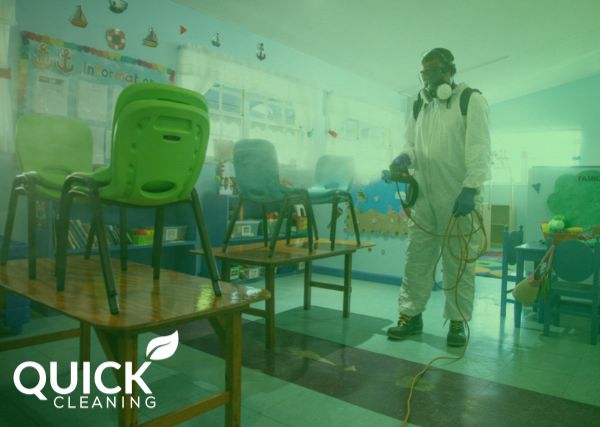
- Professional cleaning teams: Certified crews perform deep cleans and compliance-level disinfection outside of classroom hours.
- Ongoing training: All staff should receive regular education on cleaning protocols and product safety based on current best practices.
- Documentation: Every task must be tracked for accountability and compliance audits.
Evaluating a Professional Cleaning Partner for Your Daycare
- Do they use child-safe, EPA-listed products?
- Can they provide references from childcare centers?
- Do they have dedicated staff training for daycares?
- Are background checks mandatory for all cleaning crew members?
- Is their checklist documented, and aligned with industry standards?
- How do they report completed work and any concerns?
- Do they offer flexibility for outbreaks or special events?
Daycares in the Chicago area can ask these questions when evaluating options. If your staff needs to focus on the children, professional teams like Quick Cleaning can help support compliance and peace of mind with specialized daycare deep cleaning.
Key Differences: DIY Cleaning vs. Professional Daycare Services
- Available time: Staff may lack the hours or expertise for thorough disinfection daily.
- Quality & consistency: Pros follow validated checklists, reducing risk of skipped steps.
- Regulatory compliance: Professional teams update their methods with evolving local and national standards.
- Tools & supplies: Commercial-grade vacuums, specialized disinfectants, and color-coded systems exceed typical daycare equipment.
While daily classroom upkeep is critical, scheduled professional cleaning raises standards of safety and trust for parents and inspectors alike.
Product Safety: Minimizing Chemical Risk Around Children
- Always ventilate rooms after using chemical disinfectants.
- Choose no-fragrance options when possible to avoid respiratory irritation.
- Store all cleaning agents in locked, labeled cabinets.
- Train all staff to dilute and use products according to EPA standards (see EPA list).
- Never mix cleaning chemicals.
Creating a Hygiene Culture: How to Involve Staff, Parents, and Children
- Staff: Reinforce handwashing, glove usage, daily visual inspections, and positive reminders in staff rooms.
- Parents: Share your cleaning protocols and request that ill children stay home if symptomatic.
- Children: Teach age-appropriate hand hygiene, surface tidying, and ‘cover your cough’ routines.
Checklist: Preparing for Health Inspections and Audits
- Keep records of all cleaning (dates, staff, tasks completed).
- Display cleaning protocols for staff, substitutes, and inspectors.
- Stock appropriate supplies (no expired disinfectants or unlabeled bottles).
- Address inspector notes quickly and keep response documentation for reference.
- Conduct mock walkthroughs using state and CDC guidelines.
Innovations and Trends in Daycare Cleaning (2024 and Beyond)
- Touch-free cleaning: Foggers and UV-C wands to supplement manual disinfection.
- Eco-friendly product choices: Plant-based and low-chemical formulas gaining popularity, but review efficacy claims carefully.
- Electronic logs: Digital systems to track and audit cleaning performance in real-time.
- Heightened frequency: Pandemic readiness raised the bar for daily cleaning routines and response plans.
Troubleshooting: Persistent Odors, Stains, or Infection Issues
- Investigate root causes (leaks, HVAC issues, infrequent laundering).
- Use enzymatic cleaners for stubborn organic odors.
- Consult professionals for recurring infection clusters to upgrade methods.
- Regularly replace aging carpets, mats, or fabrics.
Decision Framework: When to Upgrade or Supplement Current Cleaning Routines
- Recent inspection failures or parent concerns raised?
- Recurring illness outbreaks occur?
- Are staff spending excessive time on cleaning instead of care?
- Current products or methods are outdated?
- If yes to any, consider evaluating professional daycare cleaning support for targeted improvement.
FAQ: Daycare Cleaning Guide
- What is the most important area to clean in a daycare?
- High-touch shared surfaces such as toys, table tops, bathroom fixtures, and handles, as these can spread germs most rapidly among children.
- How often should floors be cleaned in a daycare facility?
- Floors should be vacuumed and mopped daily, with immediate spot cleaning following spills or messes.
- Are there regulations on which cleaning products are allowed in daycares?
- Yes. Only EPA-approved disinfectants suitable for use in child settings should be used, following label guidance for dilution and dwell time.
- Can daycare staff handle all cleaning, or is professional service recommended?
- Staff can maintain general hygiene, but periodic deep cleaning by professionals is recommended to meet safety and compliance standards.
- What should a daycare cleaning checklist include?
- The checklist should cover toys, surfaces, bathrooms, napping areas, food prep, door handles, and log sheets for every area cleaned.
- How do you manage cleaning during illness outbreaks in daycares?
- Increase cleaning frequency, disinfect more often, isolate contaminated items, and consult CDC advice on managing outbreaks.
- Is it better to use eco-friendly cleaning products in daycares?
- Eco-friendly products are growing in popularity, but efficacy and safety come first. Verify any product’s EPA registration and real-world performance data before use.
- What records should be kept related to daycare cleaning?
- Document all cleaning activities, responsible staff, and products used. Maintain these records for at least one year.
Wrap-Up: Raising Your Daycare Cleanliness Standards
Maintaining a spotless, hygienic daycare requires structure, commitment, and access to the right expertise. By following this Daycare Cleaning Guide, you’ll advance care for children, demonstrate compliance to regulators, and offer families peace of mind. If you’d like expert support or need a custom cleaning consultation, consider partnering with a professional provider like Quick Cleaning. For additional best practices, explore the Hygiene Guide For Daycare Centers.
About Quick Cleaning
Quick Cleaning helps households and businesses in Chicago, Illinois and nearby areas keep their spaces clean and healthy. Our trained staff follow structured checklists and quality standards for recurring house cleaning, deep cleaning, move out cleaning, office, and special facility cleaning needs. Flexible scheduling, safe professional products, and transparent service are at the heart of our long-term client relationships. We are dedicated to providing reliable, professional cleaning tailored to your needs.


disinfected, cleaning companies chicago, Daycare Cleaning Chicago, Daycare Cleaning Company Chicago, daycare cleaning Elgin, childcare center cleaning Gold Coast, childcare cleaning Des Plaines, daycare cleaning Markham IL, daycare cleaning in Monee, childcare center cleaning Glencoe IL, childcare center cleaning Ukrainian Village