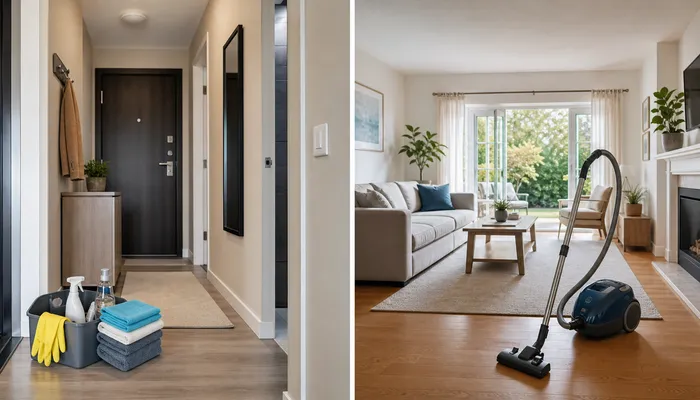
A move-in date, a lease ending, or a first deep clean can make two cleaning quotes look almost identical. The difference usually is not the label on the service; it is the property layout, the access, and what the cleaner is allowed to touch. That is why the apartment cleaning vs house cleaning comparison is worth doing before you book, especially in multi-unit buildings where entries, stairs, and storage are shared or limited.
Both services cover the same core rooms: kitchens, bathrooms, floors, dusting, and trash removal. The overlap is real, and it is why so many quotes sound alike at first. The useful comparison starts when you look at the building type, the condition of the unit, and the tasks that fall outside a standard clean.
Where the Two Scopes Overlap
Most standard visits begin with the same list. A cleaner will typically clean kitchen counters, sink areas, bathroom fixtures, mirrors, floors, and reachable surfaces. Dusting, vacuuming, and emptying small household trash are usually part of the core service, whether the property is an apartment or a house.
That shared list can hide important differences. A standard clean is not the same as a deep clean, and a move-in clean is not the same as a recurring visit. Before comparing price, compare the scope line by line: what is included, what is extra, and what the cleaner will not handle. If you want a clear picture of boundaries, review what a cleaning service will not do so you can separate standard tasks from add-ons before the crew arrives.
What Changes in a Multi-Unit Building
In a multi-unit building, the unit is the service address, but the building shapes the job. A cleaner may need to use a shared entry, wait for a key, navigate a narrow stairwell, or work around neighbors in a hallway. These details affect setup time and access, not the quality of the clean.
The biggest scope question is where the apartment ends. A unit clean normally stops at the apartment door unless the quote says otherwise. Hallways, lobbies, laundry rooms, back porches, and stairwells are common areas. They may be cleaned on a different schedule by the building, or they may require a separate agreement. If you are booking for a condo or rental, confirm which side of the door is included before the visit.
That is why multi-unit building cleaning is less about a different room list and more about the path to the unit. Storage also changes the work. Apartments often have fewer closets, smaller cabinets, and tight corners, so surfaces can be crowded. Houses may have more rooms, more floor area, and multiple bathrooms. Neither job is automatically harder; they are different shapes of work. A good quote reflects the shape, not just the square footage.
Shared Entry and Stairwell Boundaries
Residents can prepare the inside of the unit: clear personal items from counters, secure pets, and make a path to the rooms being cleaned. They usually cannot control the building’s common-area schedule, hallway condition, or stairwell access. That is a management or landlord issue, and it is separate from the cleaning of the apartment itself.
For walk-ups and small buildings, planning matters more than a long task list. Confirm how the cleaner will enter, whether there is an elevator, where supplies can be set down, and whether a neighbor needs to move a car or unlock a shared door. If your building has a shared entry, stairwell, or narrow walk-up, the existing guide to cleaning access in walk-up and 2-4 flat buildings covers the practical details without mixing them into the unit scope.
Kitchens, Bathrooms and Storage Areas
Kitchens and bathrooms are where the comparison becomes concrete. An apartment kitchen may be compact, but it can have tight edges, stacked counter items, and limited sink space. A house kitchen may be larger, with more counters, a bigger floor area, and more appliances. The time difference comes from surfaces and access, not from the word “apartment” or “house.”
Inside cabinets, inside the oven, inside the refrigerator, and interior windows are usually separate scope decisions. They should be listed in the quote if you need them. The same applies to closets, storage rooms, and laundry areas. If a task is not in the written scope, do not assume it will be handled because the property type sounds bigger or smaller.
Bathrooms follow the same logic. A single apartment bathroom can be quick to clean, but tile edges, glass doors, and built-up soap residue may need extra attention. A house with multiple bathrooms takes longer because there are more fixtures and more floors to cover. For either property, the condition of the bathroom matters more than the label on the booking.
How to Choose the Right Booking
Use a simple decision path. If you are renting an apartment or condo and the job is a standard reset, ask for an apartment cleaning scope that names the unit, the access, and the rooms included. If you are cleaning a house with more rooms, multiple floors, or a garage, ask for a house cleaning scope with those areas listed. If the property is empty for a move-in or move-out, say so up front; vacant-unit cleaning is a different scope from a lived-in home.
If you manage a rental unit, rental unit cleaning for a move-in or move-out should be quoted as a vacant-unit job, not as a standard lived-in visit. Then match the service to timing. A one-time deep clean makes sense before furniture arrives or after a long tenancy. Recurring service makes more sense once the unit is in a maintainable baseline. If you are unsure about frequency, the guide on how often maid services are needed can help you compare weekly, biweekly, and monthly options without guessing.
In Cicero, IL, which sits in Cook County, the same decision framework applies: match the quote to the property type, condition, and timing rather than to the label on the service. You can check the Census Reporter profile for Cicero for basic geographic context. When you are ready to compare a one-time clean with recurring service, request apartment and house cleaning help from Quick Cleaning and ask for the scope in writing before you book.