
How To Trick Your Mind Into Cleaning: Psychological Hacks for Cleaner Spaces
Do you ever find yourself dreading cleaning chores—procrastinating until clutter or mess becomes overwhelming? The struggle is real for busy tenants, homeowners, landlords, Airbnb hosts, and business owners alike. But what if you could outsmart that resistance and trick your mind into cleaning—making tidy habits feel automatic, rewarding, and even satisfying?
This practical guide will break down the psychology of cleaning avoidance, reveal why our minds resist cleaning, and—most importantly—deliver actionable techniques to motivate yourself or your team into action. Drawing from science, behavioral psychology, and years of professional experience at Quick Cleaning in Chicago, you’ll discover new ways to make cleaning not just easier, but actually more enjoyable. Let’s get started!
Understanding the Mental Barriers to Cleaning
Why do so many people find it hard to start cleaning, even when they know it’s important? The answer lies in a mix of psychology, habits, and the way our brains interpret cleaning tasks. Identifying these mental barriers is the first step toward overcoming them.
- Overwhelm and avoidance: Large or undefined tasks feel unmanageable.
- Perfectionism: Belief that cleaning must be “all or nothing.”
- Delayed gratification: No immediate ‘reward’, so motivation drops.
- Decision fatigue: Too many choices paralyze action.
- Negative associations: Past experiences or sensory discomfort (strong smells, tedious effort) create mental resistance.
Breaking Down Cleaning Into Manageable Micro-Tasks
One of the most effective ways to trick your mind into cleaning is by re-framing chores as small, quick wins rather than big jobs. Science shows that our brains are more likely to take action when a task feels short and finite.
- Set a 10-minute timer and challenge yourself: How much can you get done?
- Start with just one counter, shelf, or drawer—forget the whole room at first.
- Make two-minute tasks visible: e.g., “wipe kitchen sink.” Check them off as you go.
Sample Micro-Task Checklist
- Clear off one coffee table or work desk.
- Wipe bathroom faucet and light switch.
- Empty one trash bin.
- Fold or hang three pieces of clothing.
- Vacuum just one rug or small section.
As you complete each micro-task, your brain gets a “reward hit”—building motivation for the next one.
The Psychology of Reward: How to Make Cleaning Instantly Gratifying
Delayed rewards can make cleaning feel unrewarding, but there are ways to tie immediate pleasure to cleaning:
- Pair cleaning with music or an audiobook—so the action feels fun or productive.
- Give yourself a small treat (favorite snack, coffee break) after finishing a challenging area.
- Share before-and-after photos with family, friends, or an accountability partner—positive feedback boosts pride.
- Track progress visually with a simple wall chart or checklist.
Overcoming Perfectionism and “All or Nothing” Thinking
Many people fall into the trap of believing that cleaning only counts if you do everything perfectly. The truth? Partial progress is better than no progress. Here’s how to adjust your mindset:
- Remind yourself: “Done is better than perfect.” Even five minutes of cleaning makes a difference.
- Set a clear definition of ‘good enough’ for each room. Create a checklist to avoid overthinking details.
- Prioritize high-traffic and high-impact areas (kitchen counter, bathroom sink, entryway) first.
Layering Cleaning with Existing Routines
An easy way to trick your mind into cleaning is to bundle it with regular habits you already do daily. This approach, called “habit stacking,” removes friction and decision fatigue.
- Wipe down bathroom surfaces after brushing teeth.
- Pick up clutter in the living room during commercial breaks or between meetings.
- Sweep the entryway while your coffee brews.
Sample Habit Stacking Table
| Existing Habit | Cleaning Pairing |
|---|---|
| Morning coffee | Load dishwasher after pouring cup |
| Evening TV | Fold laundry between episodes |
| Shower | Wipe down shower glass |
| Returning home | Hang jackets and tidy shoes immediately |
Reframing Your Relationship With Cleaning—From Chore to Self-Care
Instead of seeing cleaning as drudgery, try viewing it as a form of self-respect and wellness. Numerous studies link tidy spaces with reduced stress, improved mood, and even better sleep. Quick Cleaning clients often report more peace of mind after a professional visit—but you can adopt this mindset at home, too.
- Visualize the end result—relaxing in a fresh, uncluttered space.
- Recognize cleaning as “me time”—use it to zone out, reflect, or refresh your mind.
- Celebrate small wins to reinforce positive feelings.
Gamification: Turning Cleaning Into a Personal Challenge or Team Competition
People (and especially kids) are more likely to start cleaning when you introduce a game element. Try these approaches:
- Beat the Clock: Set a timer and try to finish a task before it rings.
- Point System: Assign points to tasks. Reward yourself when you hit a goal.
- Family or Roommate Challenges: Compete to see who racks up the most completed chores this week—winner picks takeout!
The Decision-Point Framework: When To Clean Yourself vs. Bringing in Professionals
Sometimes, a mental block isn’t about willpower—it’s knowing when to handle cleaning yourself and when it’s more efficient or rewarding to call for professional help. Consider:
- Frequency: Are daily and weekly tasks manageable, but deep cleaning feels impossible?
- Specialized surfaces or safety: Is expert technique or product knowledge required?
- Motivation: Would bringing in a team kickstart your own momentum?
For recurring, deep, move-out, or specialty jobs, home cleaning service or office cleaning service can provide a reset—making maintenance less daunting and helping train your mind to see ongoing cleaning as lighter work.
Comparison: DIY Motivation Hacks vs. Hiring Professionals
- DIY Motivational Tricks: No extra cost, habitual control, requires self-discipline and time, good for light maintenance.
- Professional Cleaning: Upfront investment, delivers deep results fast, offloads decision fatigue, ideal for resets, moving, or facilities.
Environmental Tweaks: Designing Spaces That Nudge You Toward Cleanliness
The setup and look of your space play a big role in your cleaning motivation. Behavioral research in environmental psychology shows that making cleaning tools accessible and routines visible triggers action.
- Place cleaning caddies in high-use areas (kitchen, bathroom, office).
- Use open shelves for quick clutter scans.
- Label bins and baskets clearly for easy sorting.
- Install hooks or trays by entryways for shoes, bags, and keys.
Using Social Accountability and Peer Competition
Don’t want to let down your roommate, family, or team? Leverage that motivation:
- Share progress photos in a group chat or social app.
- Set cleaning “appointments”—commit to cleaning for 30 minutes at a pre-set time with someone else (virtually or in person).
- Practice “parallel cleaning”: work side by side on different spaces and celebrate together.
Minimizing Sensory Discomfort: Products, Tools, and Techniques
Sometimes what holds you back isn’t motivation—it’s sensitivity to smells, allergies, noise, or tactile discomfort. Quick Cleaning recommends:
- Choose unscented or hypoallergenic products where needed (see DuPage County resources for more on safe disinfection).
- Wear gloves and masks when appropriate.
- Opt for quiet, cordless vacuums or mops.
For information on safe use of chemical cleaning agents, follow official guidance from the Centers for Disease Control and Prevention.
Using Cleaning Checklists to Bypass Decision Fatigue
Uncertainty can be a hidden reason you avoid cleaning. Not knowing where to start or what “enough” feels like leads to inertia. Checklists can help.
- Personalize a checklist for your space—download a template or write your own.
- Divide by room or by cleaning frequency (daily/weekly/monthly).
- Include even small wins—crossing items off builds momentum!
Decision Framework Table: When to Do It Now, Postpone, or Outsource
| Task Type | Sign to Handle Now | Okay to Postpone | Better to Outsource |
|---|---|---|---|
| Trash/Recycling | Odor present, bin full | 1/3 full, no smell | None |
| Kitchen Surfaces | Visible crumbs, stickiness | Minor dust only | Heavy grease, buildup |
| Bathroom Deep Clean | Upcoming guests, stains visible | Only you using | Soap scum/limescale, persistent odor |
| Carpet/Upholstery | Recent spill, stains | No visible dirt | Pet damage, allergy risk |
Adjusting Your Cleaning Frequency: What the Science and Experts Suggest
How often should you clean to make your environment feel more manageable? According to the DuPage County Health Department guidelines, regular, light cleaning is more effective and sustainable than sporadic deep cleans.
- Focus on “habitual touchpoints” daily—kitchen counters, door handles, bathroom faucet, light switches.
- Weekly: Floors, dusting, changing linens.
- Monthly: Windows, behind/under furniture, air vents.
- Seasonal: Deep clean carpets, appliances, and baseboards.
Still struggling? A recurring professional schedule can help you maintain the benefits and reduce mental fatigue. See options for recurring cleaning service when you’re ready.
Addressing Special Situations: Kids, Pets, Guests, and Shared Spaces
Tricking yourself (or others) into cleaning works differently if you have children, pets, regular guests, or live with roommates. Some approaches:
- For kids: Turn cleaning into a race, treasure hunt, or reward contest.
- For pets: Use odor-neutralizing products and keep tools reachable.
- For guests: Adopt an “entryway first” rule—clean what’s most visible. Set automated reminders around events.
- Shared spaces: Create rotating task calendars and reward shared progress.
Mindfulness and Cleaning: Boosting Motivation With Presence
Everyone has days when cleaning simply feels overwhelming. Practicing mindful cleaning—focusing on the sensations, smells, or feelings of progress—can re-wire your brain to see these moments as breaks from stress, rather than another burden.
- As you clean, tune in to each step: ‘I am restoring order.’
- Breathe deeply and pay attention to before-and-after differences.
- Finish with a moment of calm gratitude for the space.
For more tips on integrating mindfulness into your routine, check out the mental health benefits of cleaning on our blog.
Common Myths That Can Sabotage Your Motivation
It’s easy to fall for outdated or counterproductive ideas around cleaning. Let’s dispel three:
- Myth: “Cleaning takes hours.” (Truth: You can make visible progress in just 10 minutes!)
- Myth: “You must do it all yourself.” (Truth: Dividing tasks—or seeking help—is smart, not lazy.)
- Myth: “Clean equals sterile.” (Truth: A comfortable, lived-in space can still be healthy and tidy.)
Peer Inspiration: Real-Life Examples of Mind Tricks That Work
Many Quick Cleaning clients in Chicago have shared what finally helped them break through cleaning inertia:
- Texting a friend before/after photos to claim “bragging rights.”
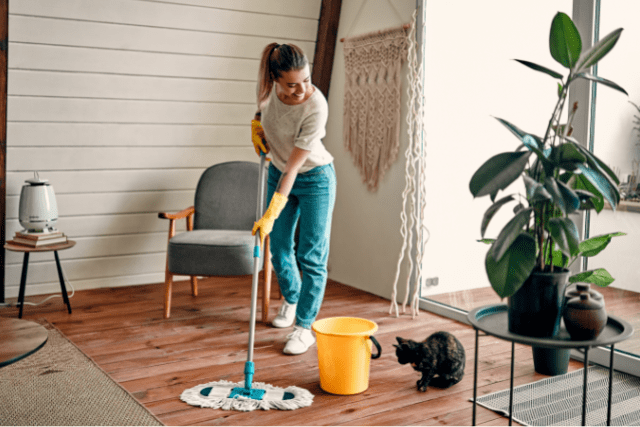
- Pairing mopping the kitchen with the start of a favorite playlist—finishing before the third song ends.
- Making Saturday morning “power hour” a family challenge with scorecards.
- Scheduling a regular pro cleaning and using it as a deadline—”I’ll just tidy so they can deep clean efficiently.”
Integrating Professional Help Into Your Workflow (Without Guilt!)
If you’re a landlord, Airbnb host, business owner, or just time-starved, bringing in professional cleaners isn’t “cheating”—it’s strategy. Teams like Quick Cleaning are trained to handle high-touch, high-traffic areas and specialty surfaces while you keep up with daily tasks.
Professional support can be especially effective for:
- Resetting routines after a period of illness, travel, or events
- Move-in/move-out deadlines
- Special facilities (office, daycare, gym, restaurant) with strict health and safety needs
Curious if this approach is right for you? Softly compare the benefits with detailed move out cleaning or restaurant cleaning options based on your needs.
FAQ: Tricks To Jumpstart Your Cleaning Motivation
- How can I make myself clean when I really don’t want to?
- Use micro-tasks, music, and a timer to make the task feel quick and rewarding. Pair cleaning with something enjoyable or make it a game.
- Are professional cleaning services worth it if I struggle to stay motivated?
- Yes—many people find that a professional reset makes daily cleaning feel lighter and less daunting. Plus, safety standards and quality are higher.
- What’s the best way to maintain motivation long-term?
- Mix up your routine, use checklists, build in regular rewards, and schedule deep cleans for support. Social accountability helps, too.
- How should I encourage kids or roommates to help clean?
- Gamify chores, set clear expectations, and reward group effort. Rotating calendars or roommate scorecards work well.
- What products are safest if I’m sensitive to smells or chemicals?
- Look for hypoallergenic or unscented supplies. Check official safety advice from local authorities or the CDC as needed.
- How do I decide which cleaning tasks to prioritize?
- Start with visible high-traffic areas. Use a checklist and frequency guideline to avoid decision fatigue. Outsource when necessary.
- Can I automate reminders so I don’t forget cleaning tasks?
- Try calendar alerts, recurring to-do lists, or cleaning apps—especially for weekly or monthly chores.
- Is it normal to feel overwhelmed by cleaning?
- Absolutely! Breaking down tasks, celebrating progress, and seeking support (social or professional) can make cleaning feel doable.
Summary: Your New Mental Framework for Cleaning Motivation
Your home or workspace doesn’t have to feel like a battleground between motivation and mess. By understanding the real psychological barriers—and picking one or more tricks that fit your lifestyle—you can trick your mind into cleaning regularly and with far less stress.
Remember, whether you’re managing a busy rental, prepping for a new lease, or simply keeping your own apartment or office neat, you don’t have to do it alone. Keep checklists visible, stack habits, gamify your approach, and don’t hesitate to call in professional support when you need a “reset.”
Explore next steps and tailored support for your situation with Quick Cleaning or visit our blog for more habit and motivation tips.
About Quick Cleaning
Quick Cleaning is a trusted residential and commercial cleaning company based in Chicago, Illinois. With a reputation for trained staff, consistent checklists, flexible scheduling, and transparent pricing, we help homeowners, tenants, Airbnb hosts, property managers, and businesses maintain high standards of cleanliness and hygiene. Our specialties include recurring house cleaning, deep cleaning, move out cleaning, office cleaning, and tailored facility services. Quick Cleaning helps households and businesses in Chicago, Illinois and nearby areas keep their spaces clean and healthy, using professional products and a personalized approach. For service options or cleaning tips, contact us today.

good cleaning playlist, cleaning services, university cleaning services, best airbnb cleaning in chicago, cleaning services Bolingbrook, South Loop cleaning company, cleaning services in Lockport, cleaning company Lombard, cleaning companies in Des Plaines, cleaning services in Lake Villa IL, cleaning company Morton Grove IL