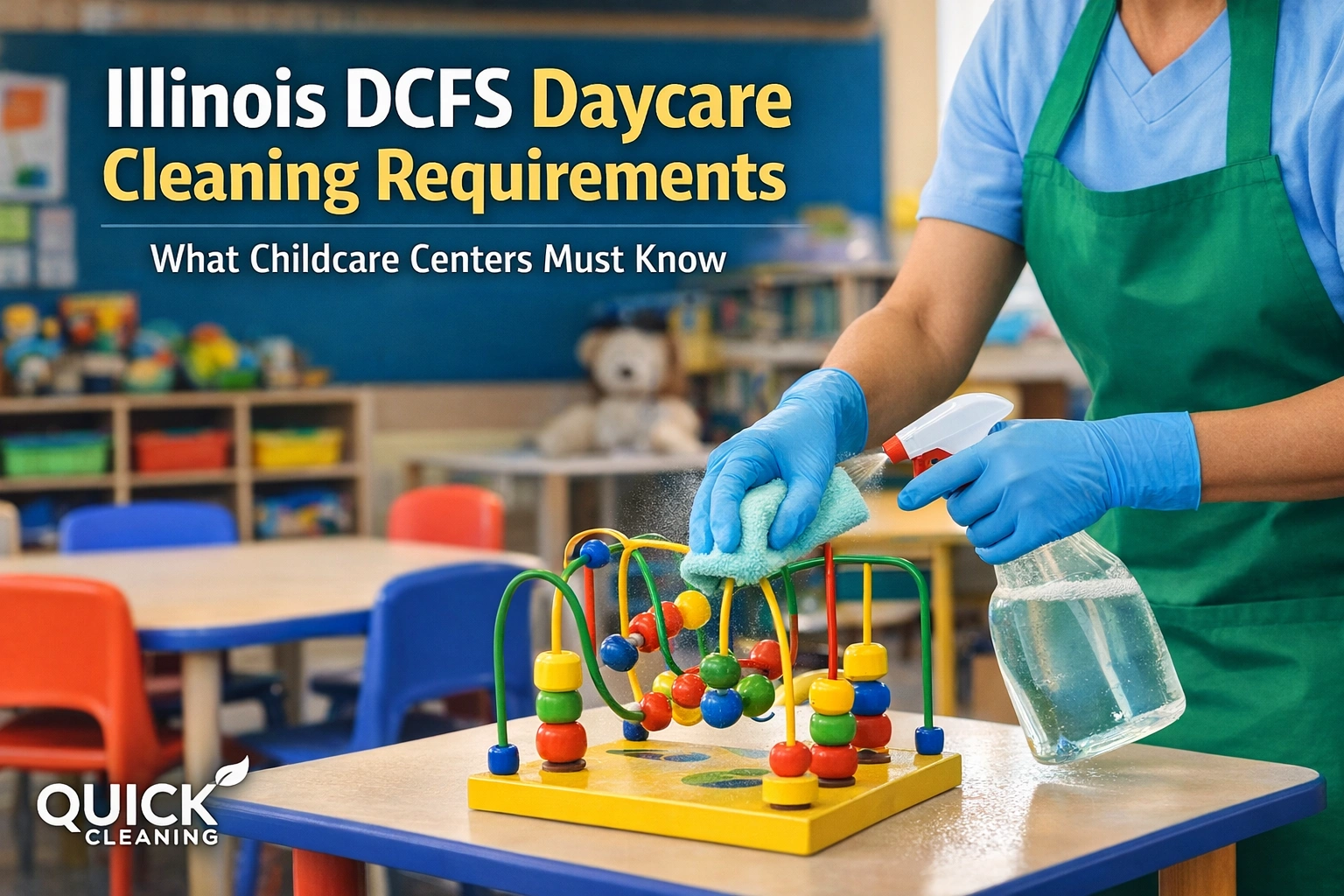
Illinois DCFS Daycare Cleaning Requirements: Complete Compliance Checklist
Running a licensed daycare in Illinois means meeting strict sanitation standards set by the Department of Children and Family Services (DCFS). Failing to meet these requirements can result in citations, fines, or even license suspension.
This guide breaks down exactly what DCFS expects for daycare cleaning and sanitation, with practical checklists you can use daily to stay inspection-ready.
What is DCFS and Why Do Cleaning Requirements Matter?
The Illinois Department of Children and Family Services (DCFS) oversees licensing for childcare facilities across the state. Their regulations, outlined in 89 Illinois Administrative Code 407 (for daycare centers) and 89 Ill. Adm. Code 406 (for home daycares), establish minimum health and safety standards—including detailed sanitation requirements.
These aren’t suggestions. They’re legal requirements tied to your license.
Why sanitation matters beyond compliance:
- Children under 5 have developing immune systems and are more vulnerable to infections
- Kids in group childcare settings experience 8-12 respiratory infections per year on average
- Proper sanitation reduces illness transmission, keeping children healthier and attendance higher
- Parents increasingly research facility cleanliness before enrollment
Meeting DCFS cleaning standards protects children, satisfies parents, and keeps your license secure.
DCFS Sanitation Requirements: What the Regulations Actually Say
Illinois DCFS regulations address sanitation throughout the licensing standards. Here are the key requirements every daycare must follow:
General Facility Cleanliness
According to DCFS standards, licensed childcare facilities must:
- Maintain the premises in a clean, comfortable, and safe condition
- Keep all areas free from hazards, debris, and unsanitary conditions
- Ensure adequate ventilation and lighting in all rooms used by children
- Maintain plumbing, heating, and cooling systems in good working order
Diaper Changing and Toileting Areas
DCFS has specific requirements for diaper changing:
- Changing surfaces must be cleaned and sanitized after each use
- Changing tables must have nonporous, easily cleanable surfaces
- Handwashing must occur immediately after each diaper change (for both staff and child)
- Soiled diapers must be disposed of in covered, hands-free containers
- Diaper changing areas must be separate from food preparation areas
Food Preparation and Serving Areas
Kitchen and food service sanitation requirements include:
- Food preparation surfaces must be cleaned and sanitized before and after each use
- Dishes and utensils must be washed, rinsed, and sanitized after each use
- Refrigerators must maintain temperatures at 40°F or below
- High chairs and feeding tables must be cleaned and sanitized after each meal
- Food storage areas must be kept clean and free from pests
Sleeping and Nap Areas
For cots, mats, and cribs:
- Bedding must be assigned to individual children
- Bedding must be laundered at least weekly, or immediately if soiled
- Cots and mats must be cleaned and sanitized at least weekly
- Cribs must meet current safety standards and be cleaned regularly
- Sleeping areas must have adequate spacing between children (3 feet recommended)
Toy and Equipment Sanitation
DCFS requires regular cleaning of items children contact:
- Toys that are mouthed must be cleaned and sanitized before use by another child
- Toys should be rotated and cleaned on a regular schedule
- Outdoor play equipment must be maintained in safe, clean condition
- Art supplies and shared materials must be cleaned regularly
Handwashing Requirements
Proper handwashing is mandatory:
- Staff must wash hands before preparing food, after diapering, after toileting, after handling bodily fluids, and after outdoor play
- Children must wash hands before eating, after toileting, after outdoor play, and after handling animals
- Handwashing sinks must be accessible and properly supplied with soap and disposable towels
Daily DCFS Daycare Cleaning Checklist
Use this checklist to ensure daily compliance with DCFS sanitation standards:
Classrooms and Play Areas
☐ Wipe down all tables, chairs, and desks with disinfectant
☐ Clean and sanitize high-touch surfaces (door handles, light switches, cabinet pulls)
☐ Vacuum carpeted areas and mop hard floors
☐ Empty trash cans and replace liners
☐ Spot-clean walls and surfaces as needed
☐ Sanitize shared toys and learning materials
☐ Clean and disinfect sensory tables and water play equipment after use
☐ Wipe down cubbies and personal storage areas
Diaper Changing Stations
☐ Sanitize changing surface after EVERY diaper change
☐ Restock diapers, wipes, and gloves
☐ Empty diaper pails and sanitize containers
☐ Clean surrounding walls and surfaces
☐ Verify handwashing supplies are stocked
Bathrooms and Toileting Areas
☐ Clean and disinfect toilets (child and adult)
☐ Sanitize sinks and faucet handles
☐ Clean mirrors and countertops
☐ Mop floors with disinfectant
☐ Restock soap, paper towels, and toilet paper
☐ Empty trash and sanitize receptacles
☐ Clean potty training chairs after each use
Kitchen and Food Areas
☐ Sanitize all food prep surfaces before and after use
☐ Clean and sanitize high chairs after each meal
☐ Wash, rinse, and sanitize all dishes and utensils
☐ Wipe down appliance exteriors
☐ Clean tables and seating areas after each meal
☐ Sweep and mop floors
☐ Check refrigerator temperature (must be 40°F or below)
☐ Empty trash and clean receptacles
Nap and Rest Areas
☐ Check bedding for soiling (replace immediately if soiled)
☐ Ensure cots/mats are properly spaced
☐ Wipe down cot frames if visibly soiled
☐ Maintain clean, clutter-free sleeping environment
Entry and Common Areas
☐ Clean front door handles and entry surfaces
☐ Sanitize sign-in areas and shared pens
☐ Sweep or vacuum entryways
☐ Wipe down parent communication areas
Weekly DCFS Daycare Cleaning Checklist
In addition to daily tasks, complete these weekly:
Deep Cleaning Tasks
☐ Launder all bedding (sheets, blankets, cot covers)
☐ Sanitize all cots, mats, and sleep equipment
☐ Deep clean carpets and rugs (spot treatment or full cleaning)
☐ Wash all washable toys
☐ Sanitize all hard plastic toys
☐ Clean interior windows and glass doors
☐ Dust blinds, vents, and light fixtures
☐ Wipe down walls, baseboards, and doors
☐ Clean and sanitize play equipment
☐ Deep clean refrigerator interior
☐ Clean microwave and oven interiors
☐ Sanitize trash cans and recycling bins
☐ Check and clean air vents and returns
Monthly DCFS Daycare Cleaning Checklist
Monthly deep cleaning maintains long-term compliance:
☐ Deep clean all carpeting (professional extraction recommended)
☐ Strip and refinish hard floors if applicable
☐ Clean behind and under all furniture and equipment
☐ Wash walls in high-traffic areas
☐ Clean ceiling fans and high fixtures
☐ Deep clean upholstered furniture
☐ Inspect and clean outdoor play equipment
☐ Check and replace HVAC filters
☐ Audit cleaning supply inventory
☐ Review and update cleaning logs
DOWNLOAD THE PRINTABLE PDF
Free printable daycare cleaning checklist based on Illinois DCFS sanitation standards. Perfect for childcare centers, preschools, and daycare providers in Illinois.
Common DCFS Inspection Failures Related to Sanitation
Knowing what inspectors look for helps you avoid citations. Common sanitation-related violations include:
High-Frequency Citations
- Diaper changing surfaces not sanitized between uses — Inspectors may observe diaper changes or check for proper supplies and procedures
- Inadequate handwashing — Staff or children not washing hands at required times, or improper technique
- Toys not being sanitized — Mouthed toys mixed with clean toys, no rotation system
- Food prep areas not properly sanitized — Cross-contamination risks, improper temperatures
- Bedding not laundered weekly — No documentation of laundry schedule
- Missing or inadequate cleaning documentation — No logs showing when cleaning occurred
How to Avoid These Violations
- Create written cleaning schedules and POST them visibly
- Maintain cleaning logs with staff signatures and dates
- Train all staff on proper sanitation procedures
- Conduct weekly self-inspections using DCFS criteria
- Keep backup supplies on hand (soap, sanitizer, paper products)
DCFS-Approved Cleaning Products and Methods
Not all cleaning products are appropriate for childcare settings. DCFS expects facilities to use products that are:
- EPA-registered for the pathogens you’re targeting
- Safe for use around children when used as directed
- Properly diluted according to manufacturer instructions
- Applied with adequate contact time (the product must stay wet on the surface for the specified time to work)
Understanding the Difference: Cleaning vs. Sanitizing vs. Disinfecting
| Method | What It Does | When to Use |
|---|---|---|
| Cleaning | Removes dirt, dust, and debris | First step before sanitizing/disinfecting |
| Sanitizing | Reduces bacteria to safe levels | Food contact surfaces, dishes, utensils |
| Disinfecting | Kills viruses and bacteria | Diaper areas, bathrooms, illness outbreaks |
Important: Always clean surfaces before sanitizing or disinfecting. Disinfectants don’t work well on dirty surfaces.
Contact Time Matters
EPA-registered disinfectants require specific “dwell time” or “contact time” to work—typically 1 to 10 minutes. Wiping a surface dry immediately after spraying does NOT disinfect it.
Check your product label for required contact time and ensure surfaces stay wet for the full duration.
Creating a Cleaning Documentation System
DCFS inspectors want to see evidence that cleaning happens consistently. A documentation system protects you during inspections.
What to Document
- Daily cleaning completion (checklist with date, time, staff initials)
- Weekly deep cleaning tasks completed
- Bedding laundry schedule and completion
- Sanitizer/disinfectant dilution checks
- Any spills, accidents, or illness-related cleaning
Simple Documentation Methods
Option 1: Paper Checklists Print daily checklists and have staff initial each task. Keep completed checklists in a binder for 12 months minimum.
Option 2: Digital Tracking Use a tablet or app to log cleaning tasks with timestamps. Many childcare management systems include cleaning log features.
Option 3: Posted Schedules Display cleaning schedules in each room with sign-off sheets. This shows parents your commitment to cleanliness while creating documentation.
When to Hire Professional Daycare Cleaning Services
While daily cleaning can be handled by staff, there are times when professional cleaning services make sense:
Consider Professional Help When:
- Preparing for DCFS inspections — Professional deep cleaning ensures nothing is missed
- After illness outbreaks — Norovirus, flu, and RSV require specialized disinfection
- Seasonal deep cleaning — Summer break, winter break, and back-to-school preparation
- Staff shortages — Maintaining standards when you’re short-handed
- Persistent problem areas — Stubborn stains, odors, or buildup staff can’t resolve
- Time constraints — Freeing staff to focus on children rather than cleaning
What to Look for in a Daycare Cleaning Service
Not all commercial cleaners understand childcare requirements. Look for:
- Experience specifically with daycares and childcare centers
- Knowledge of DCFS and OSHA compliance requirements
- Use of EPA-registered, child-safe products
- Flexible scheduling around your operating hours
- Documentation and checklists provided after service
- References from other Chicago-area daycares
If you’re looking for professional daycare cleaning in Chicago that meets DCFS standards, Quick Cleaning specializes in childcare facility sanitation with full compliance documentation.
Free Downloadable DCFS Cleaning Checklist
We’ve created a printable version of the daily, weekly, and monthly checklists in this guide.
Contact us to request your free downloadable DCFS Daycare Cleaning Checklist PDF.
Staying Inspection-Ready Year-Round
The best approach to DCFS compliance is making sanitation part of your daily culture—not a last-minute scramble before inspections.
Key takeaways:
- Know the requirements — Review 89 Ill. Adm. Code 407 for your specific facility type
- Create systems — Checklists, schedules, and documentation make compliance automatic
- Train your team — Every staff member should understand sanitation procedures
- Self-inspect regularly — Walk through your facility with inspector eyes weekly
- Get help when needed — Professional cleaning services can fill gaps and provide deep cleaning expertise
Meeting DCFS cleaning requirements isn’t just about passing inspections—it’s about creating the healthiest possible environment for the children in your care.
Need Help Meeting DCFS Cleaning Standards?
Quick Cleaning provides DCFS-compliant daycare cleaning services throughout Chicago and surrounding suburbs. Our team understands Illinois childcare regulations and uses EPA-registered, child-safe products.
We offer:
- Daily, weekly, and monthly cleaning programs
- DCFS inspection preparation deep cleaning
- Illness outbreak response sanitization
- Flexible scheduling around your operating hours
- Cleaning documentation for your compliance records
Call (773) 800-2524 or request a free quote online to learn how we can help your daycare stay compliant and spotless.
Related Articles
- Keys to Daycare Cleaning
- Hygiene in Daycare Centers
- The Importance of Tidiness in Daycares
- Printable Daycare Cleaning Checklist