Cicero, IL is a Cook County town of small buildings: single-family houses, two- to four-flat conversions and apartment blocks where one front door serves several households. That layout shapes how a cleaning visit actually runs. Before a crew reaches a kitchen, someone has to get through a gate, a buzzer or a locked common entrance, and that step is where a first booking most often stalls. This guide covers what renters, tenants and small landlords should settle before the first visit, so shared stairs and hallways do not become a surprise on the invoice.
Why Access Decides Whether a Cleaning Visit Runs on Time
In a house, the crew parks, walks to the door and starts. In a walk-up, the first ten minutes belong to entry: finding the right door, confirming the buzzer works, waiting for someone to come down, or retrieving a key from a lockbox that has not been updated since last season. Those minutes are not wasted time. They are simply how multi-unit buildings work, and buildings that plan for them have calmer visits.
Quick Cleaning works out of its Chicago office at 3748 W 26th St and covers Cicero as a service area. There is no Cicero office and no local crew base, so the useful question before a visit is not how fast someone can arrive but what will be ready when they do.
Shared entry cleaning access usually comes down to three setups: a key left with the tenant, a buzzer and phone handoff, or an unattended entry through a lockbox, a building code or a property manager. Each has trade-offs, and none is automatically better than the others.
Keys, Buzzers and Lockboxes: What to Agree Before the First Visit
Keys are the simplest arrangement and the one that needs the most trust. Ask who else holds a copy, whether the key opens both the street door and the unit door, and what happens if the lock is changed between visits. A key that no longer turns is the most common reason a first visit becomes a phone call from the sidewalk.
Buzzers and intercom handoffs work well when someone is home or reachable by phone. They fall apart when the directory still lists a previous tenant, when the buzzer is broken, or when the crew’s number gets treated as a spam call. If the building uses a phone-based entry system, confirm that the call can actually get through.
Lockboxes and building codes suit landlords and short-term rentals but carry a maintenance cost: codes change, boxes get removed, and an instruction shared with a contractor last year may be out of date. Access details are worth updating the moment the building changes a lock, a code or an intercom.
What the Crew Needs in Writing
A short message before the first visit covers almost everything: entry instructions, which door is the real entrance, where to park legally, whether a pet will be loose, and any alarm code the unit requires. Add the unit number and floor, note whether the stairs or a rear entrance are the practical route, and mention any building rule about cleaning hours. Learning those rules at the door is the expensive way to learn them.
Shared Stairwells and Hallways: Who Cleans What
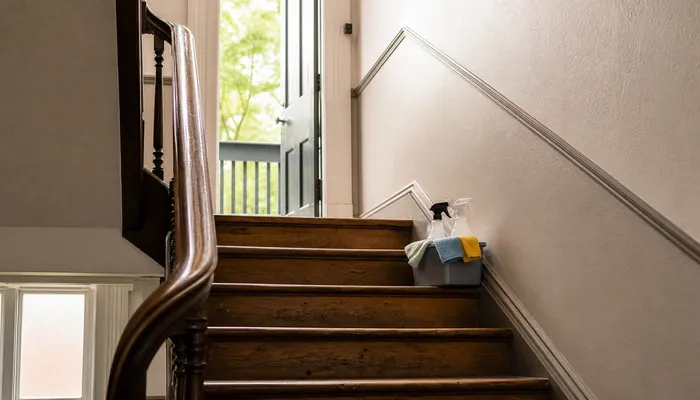
In-unit cleaning and common-area cleaning are two different scopes, and mixing them is where expectations drift. A standard apartment cleaning covers the inside of the unit: kitchen, bathroom, floors, surfaces and trash removal. A shared vestibule, stairwell or back hallway belongs to the building, and whether it is included depends on what was agreed in the quote.
For small landlords, the cleanest approach is to decide once and put it in writing: common areas are either part of the recurring scope, handled as a separate task, or not covered at all. Hallways and stairs collect the grit residents track in daily, so a scope that ignores them looks tired within weeks even when every unit is spotless.
A Short Checklist for Landlords Adding Common Areas
- Name the areas precisely: front vestibule, stair treads, handrail, hallway floors, rear exit.
- Set the frequency separately from unit cleaning, since common areas usually need a lighter but more regular touch.
- Confirm access to water, a utility closet or storage for supplies, where the building has one.
- Note the floor surfaces — original hardwood, vinyl or carpeted stairs — because each changes the method and the time.
Readers who want a price against a specific scope rather than a general figure can see how visits are planned for Cicero homes and buildings, where unit cleaning and building cleaning are quoted separately.
Coordinating With Neighbors in a 2-4 Flat
One entry, several households and a crew carrying equipment up a narrow staircase: coordination is mostly courtesy plus a little planning. A heads-up message the day before, saying that cleaning is scheduled and the front door will be open for a few minutes, prevents most friction and gives a neighbor time to move a stroller or a delivery box out of the path.
Noise and timing deserve the same honesty. Arrival windows are given as a part of the day rather than a precise hour, so the fair message to neighbors is a range. If someone in the building works nights, ask which part of the day is least disruptive and pass that along when the visit is scheduled.
Households in the same building can also share a single visit. When two or three units are cleaned back to back, the entry happens once, equipment comes up once and the building quiets down sooner. That only works when each unit’s scope is agreed in advance, so pair it with the written access note instead of raising it at the door.
When the Building Is Not Ready for a Crew
Most access problems are small and fixable in a minute, provided someone hears about them first. A blocked entrance, a missing key, moving boxes stacked on the landing or a dog loose in the hall will each stop a visit, not because the crew cannot handle it, but because the job cannot start safely without a clear path.
The fixes are unglamorous. Move boxes inside the unit before the visit. Test the buzzer the day before. Leave the key with someone who will actually be reachable, and send a photo of the lockbox location. If a dog will be home, decide whether it stays in one room or goes out for a walk, and say which.
Quick Cleaning brings 16 years of experience to every clean, with insured and bonded crews of background-checked W-2 employees working against the Certified Clean Checklist. Work is backed by The Certified Clean Guarantee™, with a 24-hour follow-up on missed items subject to service terms. The phone line is answered Monday through Sunday, 24 hours, at +1 773-644-5568.
Once the access plan is written down, the rest of the booking is straightforward. Two related guides help set expectations: how Cicero cleaning visits are scheduled from a Chicago base, and what cleaners notice first when entering a unit. Buildings with a single lift or reserved elevator hours can also read about avoiding access delays in multi-unit buildings.