Should Post-Construction Cleaning Happen Before or After the Punch List?
A renovation can look nearly finished while still producing dust, debris, and small repair tasks. That creates a practical scheduling question: Should Post-Construction Cleaning Happen Before or After the Punch List? In most projects, the best answer is both, in stages. A rough clean before punch-list inspections can make defects easier to see, while a final clean after repairs removes the dust and residue those repairs create.
This guide explains how to sequence those tasks without paying for the same cleaning twice or hiding unfinished work. You will learn what a punch list usually includes, which cleaning stage belongs before or after it, how to coordinate trades and cleaners, and what to inspect before a space is occupied. The right plan depends on the project, the type of work, and whether contractors still need access. Still, a simple sequence—construction substantially complete, rough clean, inspection and punch-list repairs, then final clean—works well for many homes and commercial spaces.
Use the decision points below to build a schedule with your contractor, property manager, and cleaning team. If work involves older painted surfaces or other potential hazards, follow appropriate safety guidance before cleaning begins.
The short answer: plan cleaning around two different milestones
Use a rough clean to prepare for inspection
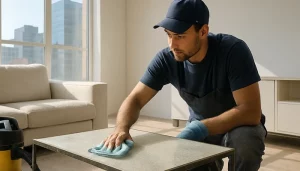
A preliminary or rough clean is usually scheduled once major construction work is complete and the site is safe to enter, but before the punch-list walkthrough. It is not the detailed final cleaning. Its purpose is to remove loose dust, scraps, and packaging that interfere with inspection and make the space difficult to evaluate. Workers can then see the surfaces, fixtures, and details that need attention.
For example, a layer of dust can make it hard to judge whether a cabinet door has a finish flaw or whether a countertop has a scratch. Clearing loose debris and wiping broad surfaces gives the owner and contractor a better view. The rough clean can also make the walkthrough safer by reducing trip hazards and improving access to rooms and work areas.
Reserve the final clean for after repair work
Once the punch list is agreed upon, contractors may return to adjust doors, touch up paint, replace hardware, reseal joints, or correct other small defects. These tasks can create fresh dust, fingerprints, adhesive residue, and packaging debris. A detailed final clean therefore belongs after punch-list work is complete, not immediately before it.
As a practical rule, schedule the final clean only after the contractor confirms that dusty or disruptive work has ended. If a late repair is unavoidable, ask how the affected area will be cleaned again and who is responsible. The answer to Should Post-Construction Cleaning Happen Before or After the Punch List? is rarely one all-purpose appointment; it is a sequence matched to the work.
What belongs on the punch list—and what belongs in cleaning
Repair and completion items need a contractor
A punch list records incomplete, damaged, or incorrect work that needs correction before the project is accepted. The exact list varies, but it may include a sticking door, a missing cabinet pull, uneven paint, a loose outlet cover, a scratched fixture, or a gap in trim. These are construction or repair items, not cleaning tasks.
Keep the list specific. Note the room, the item, and what needs attention. Photos can help both the owner and contractor agree on what they saw during the walkthrough. Avoid describing an issue only as “dirty” if the real concern is a finish defect or incomplete installation. Clear descriptions help prevent a repair from being mistaken for a cleaning request.
Cleaning removes residues but does not correct defects
Cleaning addresses construction dust, loose debris, smudges, and compatible surface residues. It does not repair scratches, repaint a wall, fix a loose hinge, or restore a damaged finish. A professional cleaner may identify a visible concern and report it, but the contractor or appropriate trade should decide how to correct construction defects.
Separate the two categories when building the schedule:
- Punch-list work: adjustments, replacements, repairs, touch-ups, and unfinished installation.
- Cleaning work: dust removal, vacuuming, wiping, cleaning fixtures, and clearing suitable residue.
- Shared decisions: who protects finished surfaces, who removes contractor materials, and who handles cleanup immediately after a repair.
This distinction matters because a cleaner should not be expected to conceal or alter a defect, and a contractor should not assume that a later cleaning appointment will remove all construction material safely.
Choose the sequence by the kind of work still underway
Dusty work calls for a later final clean
Sanding, cutting, drilling, drywall repair, and similar tasks can send fine dust beyond the immediate work area. If any of these jobs remain on the punch list, wait to do detailed cleaning until they are complete. Otherwise, dust can settle again on floors, shelves, vents, and freshly wiped surfaces.
A rough clean may still be worthwhile before inspection, especially if debris blocks access or makes the property difficult to review. Just set expectations: it is an interim reset, not the last cleaning before occupancy.
Small adjustments may need only a targeted touch-up
Some punch-list items produce little or no mess. A contractor might adjust a cabinet hinge, replace a doorstop, or install a small piece of hardware. If the final clean has already occurred, ask the contractor to protect nearby finishes and remove any packaging. Then inspect the affected spot. A complete second cleaning may not be necessary, though fingerprints or dust may call for a localized touch-up.
Use a decision table for common conditions
| Project condition | Cleaning sequence | Reason |
|---|---|---|
| Major dusty tasks remain | Rough clean, punch-list work, then final clean | Repairs can spread new dust after the walkthrough. |
| Only minor, clean adjustments remain | Inspect first; complete adjustments, then final clean | This avoids cleaning around active work. |
| Inspection access is obstructed by debris | Limited rough clean before walkthrough | Clear access helps reviewers see and reach surfaces. |
| Occupancy is urgent | Coordinate a safe, staged clean with the contractor | Cleaning must not conflict with active work or curing materials. |
| Repairs happen after final cleaning | Protect the area and arrange a targeted reclean if needed | New residue may affect only one room or surface. |
The table is a starting point, not a substitute for the contractor’s completion plan. Product labels, surface instructions, ventilation, and site safety can change what is appropriate.
Place each cleaning stage on the project timeline
Stage one: wait until the site is safe and accessible
Before anyone cleans, confirm that active construction has paused in the areas to be serviced. Tools, cords, open materials, unstable fixtures, or wet coatings can create hazards or interfere with cleaning. The contractor should identify restricted areas and explain any surfaces that need protection or additional curing time.
Do not assume that a room is ready because it looks finished. Confirm that workers have removed equipment, that utilities and fixtures can be used safely, and that the cleaning team knows where not to enter. If work continues elsewhere, agree on barriers and routes to avoid tracking dust back into completed rooms.
Stage two: conduct an interim clean when it has a clear purpose
The rough clean should be limited to what helps inspection or protects the next phase. A typical scope could include collecting loose trash, removing accessible packaging, vacuuming obvious debris, and wiping broad surfaces enough to make them viewable. The exact tasks should be agreed upon in advance.
Use the preliminary visit to spot remaining materials and access issues, not to promise a finished, move-in-ready result. When the crew, owner, and contractor share that expectation, there is less risk of confusion about why dust appears again after repairs.
Stage three: finish repairs, then schedule the detailed clean
After the punch list is complete, ask the contractor to confirm that no more dust-producing work is planned. Allow any coatings, sealants, or other materials to cure according to their manufacturer’s directions before cleaning or placing items against them. Then schedule the final cleaning and provide a list of delicate finishes, access restrictions, and priority areas.
For a renovation handover, a useful planning sequence is:
- Confirm substantial completion and safe access.
- Remove construction equipment and loose materials.
- Arrange a rough clean if it will make inspection safer or more useful.
- Walk the property, document defects, and agree on the punch list.
- Complete repairs and allow affected materials to cure.
- Confirm the site is clear of trades and schedule the final clean.
- Inspect the cleaned space and address any agreed touch-ups.
For project-specific cleaning steps, compare your plan with this post-construction cleaning checklist. It can help you identify practical cleaning details to discuss without confusing them with contractor repair obligations.
Set a clear handoff between contractors and cleaners
Name who removes tools, packaging, and leftover materials
Before the cleaning appointment, agree on who will remove tools, building materials, protective coverings, and construction waste. Cleaning teams should not have to guess whether an item is trash, a spare part, or something the owner wants to keep. Ask the contractor to clear its materials and label anything that must remain.
This is especially important for small components, extra tiles, paint, hardware, or appliance manuals. A cleaner can avoid disturbing these items when they are grouped and clearly marked. A tidy handoff also reduces the chance of a material being discarded by mistake.
Agree on access, utilities, and surface restrictions
Provide instructions for entry, alarm systems, parking or loading, and which rooms are ready. Confirm that water and electricity are available if the agreed tasks require them. Tell the cleaning team about newly installed surfaces, special finishes, fragile materials, and areas where a contractor wants no contact until a stated time.
Different products and methods suit different surfaces. A cleaner should follow the surface manufacturer’s care directions when available, rather than assume that one product works everywhere. If you are uncertain whether a residue is safe to remove, pause and ask the contractor or manufacturer. Forcing a substance off a new finish can cause more harm than leaving it for professional guidance.
Write down what “finished” means
Use a short handoff note to prevent mismatched expectations. It can identify the last trade date, the areas cleared for cleaning, unfinished punch-list items, surfaces needing protection, and who will handle any mess from late repairs. Include a contact person who can make decisions if the crew finds an unexpected issue.
- Record the agreed rough-clean and final-clean dates.
- Mark areas that remain active or restricted.
- Identify delicate surfaces and curing instructions.
- State whether contractor waste has already been removed.
- Agree how to handle a repair made after final cleaning.
A brief written plan can be more useful than a long email thread, particularly when several trades and a property representative are involved.
Protect new finishes while dust and residue are removed
Distinguish loose dust from bonded construction residue
Loose dust can often be removed with suitable dusting and vacuuming methods. Bonded paint, caulk, grout haze, adhesive, or other residues may need a product or technique selected for the specific material. Do not scrape, scour, or apply a solvent to a new surface without confirming that the method is safe.
Even a small abrasive pad can dull a polished finish, scratch glass, or damage a coating. If a mark does not lift with a gentle, approved method, stop and ask the contractor or product manufacturer what they recommend. Some stains or damage may not be fully reversible.
Keep cleaning products matched to the surface
Follow product labels, surface-care directions, and site safety instructions. Use a controlled approach: test an inconspicuous spot when appropriate, use only the necessary amount, and avoid mixing products. Ensure adequate ventilation when a product label calls for it. New materials may need extra care, and some finishes should not be wet or treated until they have cured.
Take special care around natural stone, unsealed wood, specialty coatings, new grout, and electronic equipment. Ask the contractor for care notes or manufacturer information rather than relying on a general assumption. A professional cleaning plan should respect the finish, not just pursue a spotless appearance at any cost.
Handle potential lead hazards with the right precautions
Renovation or repair in older buildings can disturb painted surfaces. If lead may be present, do not dry-sweep, sand, or casually clean suspected dust. The U.S. Environmental Protection Agency explains its Renovation, Repair and Painting Program and lead-safe work requirements in its guidance on renovation, repair, and painting. Consult qualified professionals and applicable rules before disturbing or cleaning potentially hazardous material.
General post-construction cleaning is not a substitute for lead assessment, hazardous-material abatement, or specialized remediation. If the project raises a safety concern, pause ordinary cleaning until the right professional has evaluated the situation.
Decide whether one final clean is enough
Use the last-work test
Ask whether anyone will still cut, sand, drill, patch, paint, or install materials after the planned final clean. If yes, that appointment is not truly final. Move it if possible, or define it as a partial clean and plan a later service for the areas affected.
Not every small task requires a full second visit. The amount of additional cleaning depends on the work, the room, how well the contractor protected surrounding areas, and how much dust or residue was produced. A small hardware adjustment may call for nothing more than a quick wipe, while sanding a repair can require cleaning nearby surfaces again.
Reclean only what was affected when practical
After late work, inspect the affected room and the route used to reach it. Check surfaces where dust settles, nearby floors, and any area where workers placed tools or materials. If the rest of the property remained protected, a targeted touch-up may be sufficient.
Agree in advance who will arrange and pay for post-cleanup after a late repair. That responsibility may depend on the project contract and the circumstances. Clear communication prevents the owner, contractor, and cleaner from each assuming someone else will handle the residue.
Use a simple go/no-go check before the final appointment
- Have all dusty trades confirmed that their work is complete?
- Are punch-list repairs finished or limited to clean, low-impact adjustments?
- Have materials that need curing been given the required time?
- Are tools, waste, and contractor supplies out of the cleaning areas?
- Can the cleaner access the space without passing through active work?
- Does everyone know how to report a newly discovered defect?
If several answers are no, it may be better to reschedule than to pay for a detailed clean that must immediately be repeated.
Adapt the order for occupied homes and active commercial spaces
For a home renovation, protect the move-in date
Household projects often involve furniture, family schedules, pets, and limited access to kitchens or bathrooms. Plan the walkthrough before furniture returns, if possible, so surfaces and defects remain visible. Keep one route clear for workers and cleaning equipment, and avoid moving belongings into rooms where punch-list repairs continue.
When a household must use part of the property during repairs, divide the plan by area. Complete work and cleaning in one zone before reopening it, then keep an agreed boundary around active work. This does not eliminate dust migration, but it can reduce tracking and make a later touch-up easier to manage.
For rental turnover, coordinate inspection and occupancy
A landlord or property manager may need to meet a lease start date while repairs and cleaning happen close together. First confirm that punch-list items affecting safety, function, or the agreed condition are resolved. Then schedule cleaning after the last trade has finished in each area. If timing forces overlap, identify which rooms are genuinely ready and which require a later pass.
Document the condition at handoff, especially if a tenant, owner, or contractor will enter between cleaning and occupancy. Foot traffic can leave marks or bring in dust. A final walkthrough after the space is cleaned can clarify whether any new work or access affected the result.
For commercial projects, include building operations
Offices, retail areas, and other commercial spaces may have access controls, equipment, shared corridors, or operational requirements. Coordinate with the person responsible for the building, security, and any facility-specific procedures. Confirm which areas can be cleaned, when ventilation or utilities are available, and whether workers will return after the cleaning appointment.
If the project involves a specialized facility, follow its applicable safety and hygiene rules. General cleaning guidance cannot replace a facility’s own infection-control, equipment, or regulatory procedures. A written sequence is particularly helpful when a contractor, building representative, and cleaning team work different shifts.
When a renovation is part of a larger property turnover, post-construction cleaning service is one option to discuss after you have established the project’s scope, timing, and access requirements.
Prepare a practical walkthrough and acceptance record
Inspect repairs before judging the final clean
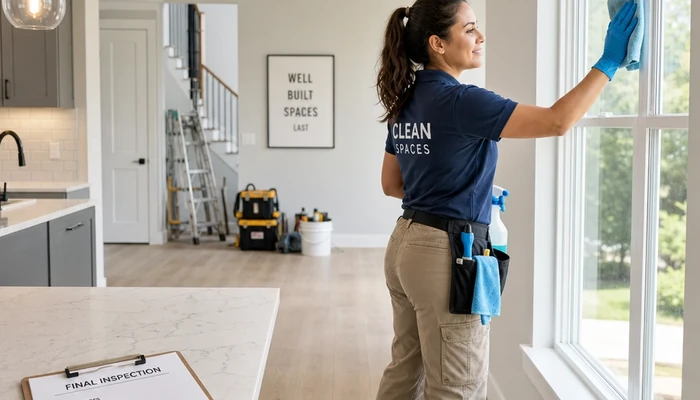
Use the punch-list walkthrough to confirm that the contractor addressed the agreed items. Look at function as well as appearance: doors should operate, installed components should be present, and repair areas should be complete. Note any item that remains unresolved instead of treating it as a cleaning defect.
After the final clean, evaluate cleanliness separately. Check whether agreed areas have been addressed and whether any visible dust or residue remains. Keep the standard realistic and tied to the scope: different materials, project conditions, and access restrictions affect results. A cleaning inspection should not silently expand into repair work.
Record room-by-room status
A short status sheet helps everyone understand what is ready. It can list rooms, punch-list status, cleaning status, and any open concern. Use photos when they clarify a particular defect or area, and include the date. Do not rely on memory when several people are checking a large property.
- Mark completed repairs and unresolved items separately.
- Note rooms that were unavailable during cleaning.
- Record any surface that needs manufacturer guidance.
- Identify whether late contractor access occurred after cleaning.
- Assign an owner and due date to each remaining task.
Keep safety separate from cosmetic acceptance
A space can appear clean without being ready for occupancy if a safety issue remains. Conversely, a minor cosmetic concern does not always mean cleaning failed. Treat hazards, functional defects, finish quality, and cleanliness as distinct questions. If a concern falls outside the cleaner’s role, refer it to the contractor or qualified professional rather than asking a cleaning crew to make a technical judgment.
The CDC’s educational material on cleaning, sanitizing, and disinfecting explains that these are distinct activities and should be selected for the situation. See the CDC cleaning, sanitizing, and disinfecting resource when deciding whether a particular area requires more than ordinary soil removal. It does not replace project-specific safety instructions.
FAQ: timing post-construction cleaning and punch-list work
Should Post-Construction Cleaning Happen Before or After the Punch List?
For most projects, schedule a limited rough clean before the punch-list walkthrough if dust or debris interferes with inspection. Complete detailed final cleaning after repairs and other dusty work are finished. If the punch list contains only small, clean adjustments, a full rough clean may not be necessary.
Can the cleaner come before the contractor’s final inspection?
Yes, if the purpose is to clear loose debris and make surfaces easier to inspect. Tell the cleaning team that it is an interim clean, and confirm that the space is safe and accessible. Do not treat that visit as final if contractors still expect to work in the area.
What if a contractor returns after the final clean?
Ask the contractor to protect completed surfaces, remove tools and packaging, and clean up after the work. Then inspect the affected area and nearby surfaces. A small adjustment may need only a targeted touch-up; dust-producing repairs may call for more extensive recleaning. Confirm responsibility for that work in advance.
Should the punch list be completed before the final walkthrough?
The walkthrough is generally where the owner and contractor identify and document remaining items. The contractor then addresses the agreed list, and the parties may check completion afterward. The exact process depends on the contract and project. Keep the cleaning schedule connected to the actual completion of work rather than assuming the list is finished after the first inspection.
Can cleaners remove paint, caulk, grout haze, or adhesive?
It depends on the material, surface, and product instructions. Some residues need specialized methods, and aggressive scraping or chemicals can damage new finishes. Ask the contractor or manufacturer for an approved approach. Do not assume a general cleaning service includes repair, restoration, or hazardous-material removal.
Is a rough clean always necessary?
No. It is useful when loose debris blocks access, creates a safety concern, or makes defects difficult to see. If the property is already clear and the punch-list walkthrough can proceed safely, you may be able to go directly to repairs and schedule one final clean afterward.
How long should we wait after painting or sealing?
Follow the product manufacturer’s curing and ventilation instructions, along with the contractor’s guidance. A finish may feel dry before it is ready for contact, moisture, or cleaning products. The required wait depends on the product and conditions, so do not use a generic time estimate in place of the specific instructions.
Does a clean property mean every punch-list item is resolved?
No. Cleanliness and construction completion are separate standards. Cleaning removes eligible dust and residue; the contractor remains responsible for agreed repairs and unfinished work. Use separate inspection notes for each category.
Make the final timing decision with three checks
Confirm the work sequence
Ask the contractor which trades will return, what tasks remain, and whether any of them create dust or residue. Then decide whether a rough clean will improve the walkthrough or whether it would simply be repeated. Do not set a final-clean date until the remaining work is clear enough to plan around.
Confirm access and surface readiness
Check that the cleaning areas are safe, accessible, and ready for the methods required. Identify special finishes, curing restrictions, and any suspected hazards before booking the work. When a condition is uncertain, get qualified guidance rather than improvising.
Confirm who owns the last cleanup
Write down who removes contractor waste, who protects new finishes, and what happens if repairs occur after cleaning. A clear handoff is often more important than trying to predict every detail of a renovation. In many cases, the most reliable plan is a purposeful rough clean, a documented punch-list walkthrough, completed repairs, and one detailed final clean at the end.
That sequence answers Should Post-Construction Cleaning Happen Before or After the Punch List? with a practical distinction: clean lightly before inspection when it helps, but save the detailed final clean for after punch-list work. Adjust the plan to the project, the materials, the safety requirements, and the timing needs of the people who will use the space.
About Quick Cleaning
Quick Cleaning provides cleaning support for recurring house cleaning, deep cleaning, move out cleaning, office cleaning, and facility cleaning projects. The appropriate scope and timing depend on the property’s condition, the work completed, and any access or surface-care requirements. Quick Cleaning helps households and businesses in Chicago, Illinois and nearby areas keep their spaces clean and healthy. For renovation-related cleaning, coordinate the service date with the contractor so that cleaning follows the work that could create new dust or residue.
cleaning services chicago, renovation cleaning, construction cleanup Cleaning Chicago, construction cleaning Wheeling, new construction cleaning Bannockburn, builders cleaning Libertyville, renovation cleaning Crest Hill IL, post construction cleaning Cedar Lake, construction cleanup South Holland, after renovation cleaning West Dundee