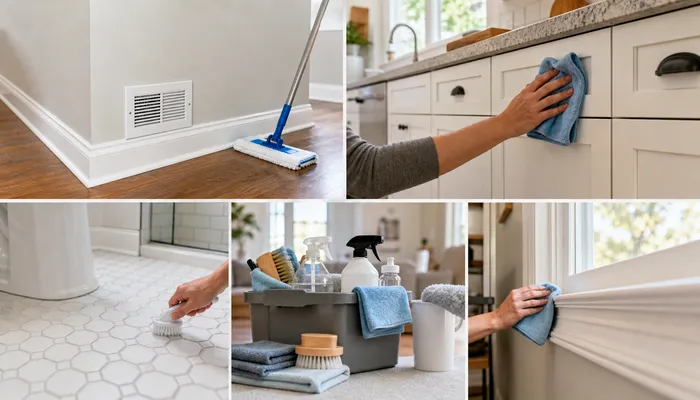
If you are asking how often should you deep clean your house, the short answer is that most homes need a deep clean every three to six months, with more frequent visits when pets, allergies, young children, or heavy foot traffic raise the cleaning load. In the Chicago North Suburbs, the better answer is a rhythm rather than a rule: a spring reset after winter, a fall reset before the holidays, and extra deep cleans around moves, renovations, or rental turnovers. That rhythm works for single-family homes, condos, and apartments across Glenview, Wilmette, Park Ridge, Des Plaines, and Niles.
A Practical Deep-Cleaning Baseline for North Suburb Homes
Deep cleaning is not the same as a weekly tidy-up. It reaches the places routine cleaning often skips: baseboards, vent covers, grout lines, cabinet fronts, appliance exteriors, blinds, and the edges behind furniture. For many households, every three to six months is enough. A home with two adults and a regular cleaning routine may stretch to twice a year. A home with shedding pets, seasonal allergies, a home office used by clients, or several people moving through the same kitchen may need a deep clean every one to three months.
The schedule should also follow the property, not just the calendar. A large single-family house with multiple bathrooms takes longer than a one-bedroom condo, but the condo may need more frequent attention in the kitchen and bathroom because every surface gets used more intensely. If you want a local starting point, house cleaning in Park Ridge, IL can be scoped around the size and condition of the home rather than a generic package.
Why Illinois Homes Need a Seasonal Rhythm
Illinois is a large state with very different housing and weather patterns, but the Chicago North Suburbs share a recognizable seasonal cycle. Winter brings salt, grit, closed windows, and more time indoors. Spring brings the urge to open everything up, which often reveals dust on vents, window tracks, and upper shelves. Summer humidity can make bathrooms, kitchens, and basements feel heavier. Fall is the practical moment to reset before holiday guests, school schedules, and colder weather return. Illinois is home to an estimated 12.7 million people according to U.S. Census Bureau data via Census Reporter, but the cleaning calendar in a North Suburbs home is usually set by the household, the building, and the season rather than by a statewide average.
Indoor air quality guidance from the EPA is a useful reminder that dust, humidity, and ventilation all affect the indoor environment. You do not need a medical claim to justify a deep clean. You need a practical reason: the vents are visibly dusty, the bathroom grout no longer looks clean after scrubbing, or the kitchen cabinets feel tacky near the handles. Illinois geography and regional context also matter because homes near the lake, near O’Hare, and farther inland can face different dust, moisture, and traffic patterns. The point is not to guess; it is to inspect your own space and set a realistic interval.
How Often to Deep Clean Your House by Home Type
Single-Family Houses
Single-family homes usually need the fullest deep-clean cycle because there are more rooms, more storage, and more surfaces that collect dust. A three- to six-month interval is a sensible baseline, with a spring and fall deep clean as anchor points. If the home has pets, carpets, forced-air heating, or a finished basement, shorten the interval. A deep clean should include the rooms you actually use, not only the ones guests see.
Apartments and Condos
Apartments and condos may have less square footage, but they often have more concentrated use. Kitchen cabinets, bathroom exhaust fans, balcony doors, and closet floors can collect buildup quickly. A deep clean every three to six months is still a good baseline, with monthly or quarterly attention to the kitchen and bathroom if the unit is small and heavily used. For a unit-specific scope, apartment cleaning in Des Plaines, IL can focus on the rooms and surfaces that matter most in a smaller footprint.
Airbnb and Rental Turnovers
Short-term rentals and rental properties follow a different clock. A deep clean is not only about frequency; it is about the turnover window between guests or tenants. Beyond the routine turnover clean, schedule a deeper reset every one to three months depending on occupancy, pets, cooking, and whether the property is near a busy corridor or a quieter residential block. Rental property cleaning in Niles, IL can be planned around check-out times, laundry, and the areas guests notice first.
Move-In and Move-Out Cleaning
Moves create their own deadline. The best time for a deep clean is after the home is empty and before belongings arrive, or after the last box leaves and before the final walk-through. That is when floors, closets, cabinet interiors, and appliance edges are accessible. A move-out clean also gives you a clear record of condition before keys change hands. If a move is on the calendar, move-out cleaning in Glenview, IL can be scheduled around the handover date rather than squeezed into an already full moving day.
Signs Your Home Is Due for a Deep Clean
Surface cleaning can hide a lot. These are the signals that the house needs more than a quick pass:
- Baseboards, door frames, and vent covers have visible dust or dark edges.
- Bathroom grout, caulk lines, or tile corners no longer brighten after a normal scrub.
- Kitchen cabinet fronts feel sticky near handles, or the range hood filter is coated.
- Blinds, window tracks, and the tops of frames collect dust faster than the floors.
- Pet hair appears along walls, under furniture, or on stair edges after vacuuming.
- Rooms smell stale even after airing them out, especially in humid weather.
- You are preparing for guests, a move, a rental turnover, or a seasonal reset.
If several of these apply, a deep clean is probably overdue. For a sensible room-by-room sequence, the guide on cleaning a house in the right order can help you plan the work before the crew arrives.
A Simple Room-by-Room Priority List
Deep cleaning works best when it moves from top to bottom and from dry to wet. Start with dusting ceiling corners, vents, and light fixtures. Move to shelves, cabinet tops, and blinds. Then clean surfaces, appliances, sinks, tubs, and toilets. Finish with floors and any final detail work. In the kitchen, prioritize the range hood, backsplash, cabinet fronts, sink area, and the floor edges. In bathrooms, focus on grout, exhaust fans, glass, and the area around the toilet base. In living areas, look under furniture, behind doors, and along baseboards. In bedrooms, pay attention to headboards, under-bed edges, closet floors, and window coverings.
How the Schedule Changes Across the North Suburbs
From Des Plaines and Niles to Park Ridge, Glenview, and Wilmette, the housing mix includes single-family homes, condos, apartments, and rental units. That mix is why a single deep-cleaning interval cannot fit every address. A larger house with multiple bedrooms may need more time per visit but fewer visits per year. A smaller condo may need less time per visit but more frequent kitchen and bathroom resets. A rental property may need a deep clean tied to occupancy rather than a season. Parking, building access, and building rules can vary from one property to the next. A good cleaning plan accounts for those practical details before the crew arrives.
For a seasonal reset, deep cleaning in Wilmette, IL can be planned around spring opening, summer humidity, or the return of a busy household schedule. The important point is not the city name on the invoice; it is whether the scope matches the home.
What a Professional Deep Clean Should Cover
Professional deep cleaning should be scoped before the visit, not after. A useful quote asks about square footage, bedrooms and bathrooms, pets, allergies, condition, and whether the home will be empty. Quick Cleaning brings 16 years of experience to every clean, and the work is backed by the Certified Clean Guarantee™. The team is insured and bonded, uses background-checked W-2 cleaners, and follows the Certified Clean Checklist with inspection points before sign-off. If something is missed, the published follow-up is a 24-hour window, subject to service terms.
Current published starting rates are useful for orientation: recurring maid service from $120 per visit, deep cleaning from $220 per visit, and move-in or move-out cleaning from $280 per unit. Those are starting points, not a fixed quote for every address. The final price depends on square footage, condition, and frequency, and it should be confirmed before the crew arrives. Commercial cleaning is priced separately by square footage, schedule, and scope.
Deep Clean or Standard Clean: How to Decide
A standard clean keeps a maintained home in shape. A deep clean resets the areas that standard cleaning does not reach. If the home has been maintained regularly, a deep clean every three to six months may be enough. If it has been months since the last deep clean, or if the property is changing hands, start with a deep clean and then move to a maintenance schedule. For multi-unit buildings, the comparison between apartment cleaning and house cleaning is a useful way to understand what changes when access, shared walls, and building rules are involved.
FAQ
How often should you deep clean your house if you have pets?
Many pet households do best with a deep clean every one to three months, especially if the pet sheds, has accidents, or spends time on furniture. Between deep cleans, vacuum edges and under furniture more often.
Does a deep clean replace regular cleaning?
No. A deep clean resets buildup; regular cleaning maintains it. Most homes get the best result by pairing a seasonal or quarterly deep clean with a lighter recurring clean.
How long does a deep clean take?
The time depends on square footage, condition, bathrooms, and add-ons. A small condo may take less time than a large house with multiple bedrooms and heavy buildup. The quote should clarify the expected scope before the visit.
Do I need to be home during the cleaning?
Not necessarily. Many customers provide access instructions and go about their day. If you prefer to be present, say so when booking so the crew can plan the walk-through.
Which North Suburbs areas does Quick Cleaning serve?
This guide covers Glenview, Wilmette, Park Ridge, Des Plaines, and Niles. Use the city links above to see the local cleaning services page for each community.
How do I choose between a deep clean and a move-out clean?
A deep clean is a seasonal or periodic reset. A move-out clean is tied to a handover date and usually includes the empty-home details a landlord or next occupant will inspect. If you are moving, schedule the cleaning after the home is empty.
If you are still deciding how often should you deep clean your house, start with the three- to six-month baseline, then adjust for pets, allergies, guests, rentals, or a move. The right schedule is the one your home can actually maintain. Review the city page for your community and request a quote with the details that affect the work: square footage, bedrooms and bathrooms, condition, and preferred timing.