If you have ever asked, “What do house cleaners do?”, the short answer is that a professional cleaning visit is a sequence of checked tasks, not a quick tidy-up. In homes across the Fox Valley and nearby northwest suburbs, that sequence has to bend around Illinois seasons, different housing styles, and the way each household actually lives. We work through kitchens, bathrooms, floors, dust lines, and the small details that get skipped during a busy week. The goal is not a showroom look; it is a reliable reset that fits the home and the people in it.
The Region Behind the Routine: Illinois Homes and Four Seasons
Illinois is a Midwestern state, with Chicago anchoring the northeast corner and the northwest suburbs spreading out from there. The state’s weather gives cleaning a practical shape: cold winters bring road salt, slush, and tracked-in grit; spring brings mud and pollen; closed-up months let dust settle on vents, trim, and floor edges. The EPA’s indoor air quality guidance is a useful reminder that dust and ventilation are not just visual issues. For a cleaning visit, that means entryways, floor lines, window tracks, vent covers, and baseboards deserve regular attention, not just the middle of the floor.
What House Cleaners Do on a Standard Visit
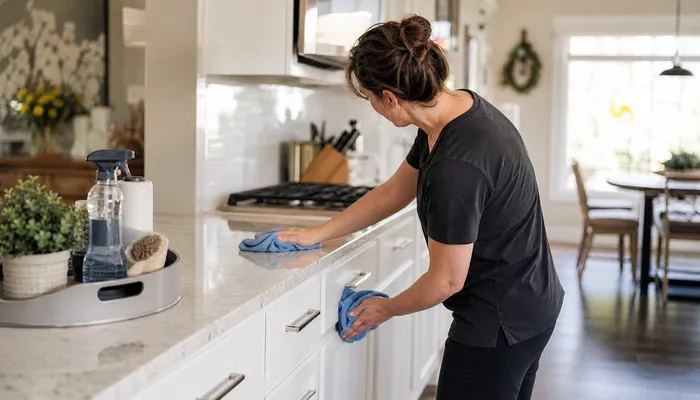
To answer what do house cleaners do in a typical home, start with the rooms that carry the most traffic. A standard visit usually covers the kitchen, bathrooms, bedrooms, living areas, and the floors that connect them. The exact scope depends on the company, the size of the home, and the condition when the crew arrives, so it is worth asking for a written checklist before booking.
- Kitchen: counters, sink, stovetop, exterior of appliances, cabinet fronts, backsplash, floor, and trash removal.
- Bathrooms: toilets, sinks, tubs or showers, mirrors, fixtures, and floors.
- Living areas and bedrooms: dusting reachable surfaces, mirrors, vacuuming, floor care, and light tidying of visible areas.
- Whole-home details: light switches, door handles, cobwebs, baseboards on rotation, and emptying wastebaskets.
Most standard cleans do not include heavy decluttering, dishes, personal laundry, pet waste cleanup, or moving large furniture. Bed linens may be changed only when requested. If those tasks matter to you, say so before the visit so the estimate reflects the real job.
Standard Clean, Deep Clean, and Move-Out Work: How the Scope Changes
A standard clean maintains a home that is already in reasonable shape. A deep clean is for buildup: inside appliances, cabinet interiors, vents, window tracks, hand-scrubbed edges, and surfaces that have not been moved in a while. A move-out clean goes further because the next person needs to see empty cabinets, clean closets, appliance interiors, and floors without furniture in the way. The practical answer to what do house cleaners do changes with the scope, not just the square footage.
Layout matters. A family in Barrington booking recurring house cleaning in Barrington, IL may want a weekly or biweekly reset, while a Bartlett move-out turnover in a mid-size suburban home usually needs the inside of cabinets and appliances. In Elgin, a larger or older Fox River valley home may need extra time for high ceilings, wood floors, and detail work. Hanover Park apartment and townhome visits often hinge on stairs, shared walls, and parking access. A smaller West Dundee home or a small local office may need a shorter, more focused scope.
Supplies, Products, and the Tasks Homeowners Often Skip
Professional cleaners usually bring their own supplies, but it is fair to ask what they use and whether they can work around sensitivities, pets, or specialty surfaces. Products matter less than technique: color-coded cloths, separate bathroom tools, and a consistent order of work prevent cross-contamination. If anyone in the home has respiratory concerns, ask about ventilation and dust control rather than assuming a fragrance-free product is enough.
The tasks homeowners skip most often are the ones that sit at the edge of the room: vent covers, floor edges, window tracks, baseboards, light switches, door handles, and the space under furniture. Those are also the places where winter salt and spring pollen collect. A good walkthrough at the start of the visit can flag them before the work begins.
Apartments, Townhomes, and Single-Family Homes Across the Group
The northwest suburbs and Fox River valley include a mix of housing types, and that mix changes how a cleaning visit runs. Single-family homes may have multiple bathrooms, stairs, and larger floor areas. Townhomes add shared walls and tighter parking. Apartments may have one entrance, a smaller footprint, and building rules about access or elevator use. Pets add hair, dander, and the need to secure animals during the visit. For a closer look at how layout changes the job, see Apartment Cleaning vs. House Cleaning: What Changes in Multi-Unit Buildings.
Small Offices and Light Commercial Cleaning
House cleaning and commercial cleaning are not the same job. A small office, retail space, or restaurant needs a schedule that fits business hours, secure access, restroom restocking, breakroom cleaning, and entryways that take a beating from foot traffic. Recurring office cleaning is usually priced by square footage, frequency, and scope, so a walkthrough is more useful than a phone guess. If a business also has a residential-style space attached, keep the two scopes separate in the estimate.
How to Prepare for a Cleaning Visit
A little preparation makes the visit more effective. Clear personal clutter from counters and floors, secure pets, share entry instructions, and point out fragile surfaces, antiques, or areas that need special care. If you have priorities, say them plainly: kitchen first, bathrooms first, or the rooms guests will see. For a detailed walkthrough of what happens from booking to arrival, read What Happens During Your First Professional Cleaning Visit.
It also helps to know what cleaners notice first when they enter a unit. Entryways, floors, bathrooms, and kitchen surfaces set the tone for the rest of the visit. A short article on what cleaners notice first when entering a unit explains the practical details.
Frequently Asked Questions
What do house cleaners do that I should still handle myself?
Most standard visits do not include personal laundry, dirty dishes, heavy decluttering, pet waste, biohazards, or moving large furniture. If you need one of those tasks, ask before booking so it can be scoped separately.
How is a deep clean different from a standard clean?
A standard clean maintains a home in reasonable condition. A deep clean adds buildup work such as inside appliances, cabinet interiors, vents, window tracks, and detailed edge cleaning. The difference is time and scope, not just the label.
Do cleaners bring supplies and equipment?
Most professional teams bring their own supplies and equipment. Ask about product sensitivities, pets, and specialty surfaces before the visit. Some homes prefer a specific product for wood floors or stone counters.
Should I choose recurring cleaning or a one-time visit?
Recurring cleaning keeps a home from drifting into buildup and is usually easier to budget. A one-time visit fits a move, a seasonal reset, a guest arrival, or a first deep clean before starting a recurring schedule.
Can I stay home during the cleaning?
Yes. Some people stay and work in another room; others leave keys or entry instructions. Either way, make sure the crew knows which rooms are off-limits and how to reach you if a question comes up.
Making the Checklist Fit the Home
Knowing what do house cleaners do is less about memorizing a list and more about matching the list to the home, the season, and the reason for the visit. A standard clean, a deep clean, and a move-out turnover each answer a different problem. Across the northwest suburbs and the Fox River valley, the best starting point is a clear walkthrough, a written scope, and a schedule that fits the household rather than the other way around.