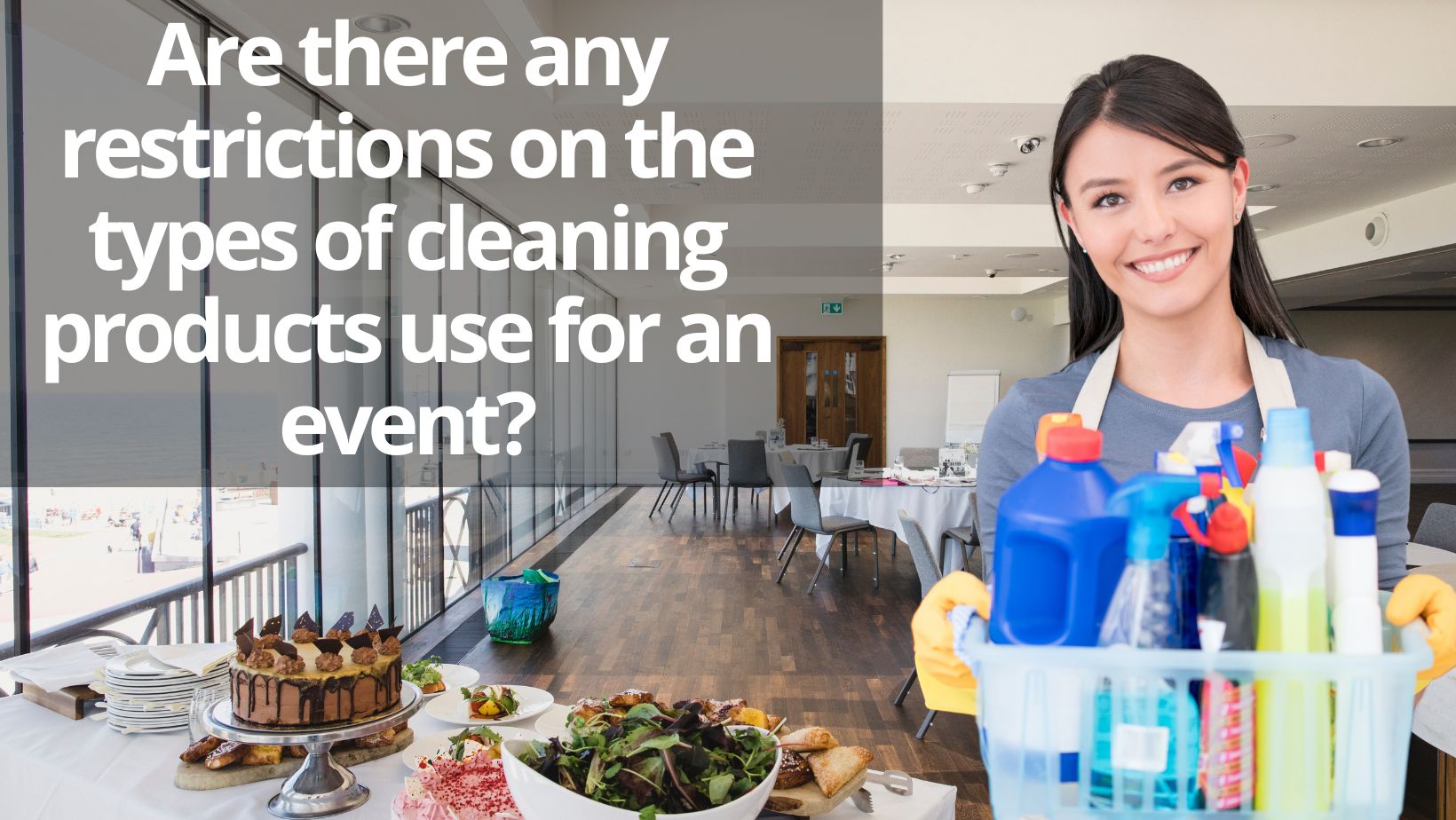
The Complete Guide to Restrictions on Cleaning Products Used for Events
Planning an event—be it a private party, corporate meeting, fundraiser, or grand community gathering—comes with plenty of details to oversee. Among these, one often-overlooked but critical area is understanding Are there any restrictions on the types of cleaning products use for an event? This comprehensive guide will provide you with the facts, context, and actionable steps to ensure your event meets both hygiene goals and regulatory compliance. Whether your event is in a residential space, commercial venue, or unique location in Chicago, making informed choices about cleaning products helps guarantee safety, comfort, and peace of mind for every attendee.
Navigating the Standards: Who Sets Event Cleaning Product Restrictions?
Event planners must first know which authorities and guidelines affect the choice of cleaning products. In Chicago and the wider U.S., restrictions and recommendations often come from:
- Venue and Facility Management: Facilities often have house rules on products allowed.
- Local Health Departments and Codes: Cities, counties, and states may mandate certain standards, especially for public gatherings and food service areas. (See regional standards here.)
- Event Type or Audience: Child-focused, medical, or high-traffic events may carry stricter limitations.
- OSHA and CDC: Federal health standards and worker safety regulations guide permitted products, mixing, storage, and labeling.
- Third-Party Certifications: Groups like Green Seal or EPA’s Safer Choice signal products with sustainable and low-toxicity profiles.
Top 6 Reasons Why Cleaning Product Restrictions Exist at Events
- Attendee Health and Allergy Protection
- Surface and Venue Preservation
- Environmental Impact
- Compliance with Health Codes
- Fire and Chemical Safety
- Brand and Reputation Protection
For a deeper dive into why event cleanliness is so crucial for reputation, visit this exploration of event cleanliness importance.
Risk Zones: Where Cleaning Product Choices Matter Most
Different parts of an event space have unique cleaning demands.
- Food Prep and Serving Areas: Must use food-safe, non-toxic sanitizers.
- Restrooms: Disinfectants required, but with minimal fumes for enclosed spaces.
- Common Touch Points: Doorknobs, handrails, electronics—need non-corrosive, fast-drying solutions.
- Decor, Floors, and Fine Surfaces: Abrasive or bleach-based products often restricted to avoid damage.
What Cleaning Product Ingredients Are Most Frequently Restricted?
Venues and health authorities frequently ban or limit products including:
- Bleach (Sodium Hypochlorite): Powerful, but can emit dangerous fumes and damage surfaces.
- Ammonia: Irritating fumes; may react dangerously with other chemicals.
- Volatile Organic Compounds (VOCs): Often found in strong fragrances or degreasers; can exacerbate respiratory issues.
- Quaternary Ammonium Compounds (Quats): Effective for disinfection, but increasingly scrutinized for health/environment impacts.
- Undiluted Acids or Alkaline Products: May corrode surfaces or cause burns if not handled properly.
Always consult the venue’s restrictions for an up-to-date list before sourcing cleaning products for your event.
Local Event Regulations: Chicago’s Cleaning Product Standards
In Chicago, both commercial and public venues typically follow city and county health codes, which can be reviewed via trusted resources like DuPage Health Department guidelines. Important points include:
- Permitted disinfectant types for food service and public areas
- Safe storage and labeling requirements
- Restrictions on air-freshening aerosols or foggers due to enclosed air system risks
When in doubt, check with your venue manager for a list of approved and restricted cleaning products.
Event Types and Their Unique Cleaning Product Needs
Different events present unique scenarios. Here’s a structured comparison of typical event types and key product considerations:
| Event Type | Common Restrictions | Recommended Products |
|---|---|---|
| Food Festivals, Banquets | Food-safe only, no bleach on serving surfaces | Quat-free sanitizers, hydrogen peroxide-based cleaners |
| Kids/Family Events | No high-toxicity or scented chemicals | Fragrance-free, EPA Safer Choice, natural cleaners |
| Office/Business Events | Low-VOC, anti-corrosive | Alcohol wipes, non-abrasive sprays, disposable towels |
| Outdoor Festivals | Eco-friendly, biodegradable mandatory | Plant-based multi-surface cleaners |
| Medical/Health-Related | CDC-approved only, no unregulated substitutes | Hospital-grade disinfectants, approved sanitizer wipes |
Checklist: Preparing Event Cleaning with Product Restrictions in Mind
- Request the venue’s cleaning policy and restricted substance list in writing.
- Identify attendee risk factors (allergies, sensitivities, age ranges).
- Map out cleaning tasks for each event area (restrooms, kitchen, floors, etc.).
- Source products with clear ingredient labels and certifications when possible.
- Cross-check all products against local health and fire codes.
- Train all cleaning personnel on safe product use and emergency steps.
- Maintain Safety Data Sheets (SDS) for all products onsite.
- Schedule a venue walkthrough prior to the event for final approval.
For a pre-event walkthrough, consult the Pre-Event Cleaning Checklist.
How Professional Cleaning Teams Choose Approved Products
Professional event cleaning companies like Quick Cleaning stay current on product restrictions through:
- Ongoing staff training and certification updates
- Vendor relationships with eco-conscious supply chains
- Clear communication with venue managers and organizers
- Proactive inspection of labels for allergens, toxic ingredients, and certifications
- Safe storage and proper dilution procedures for concentrated products
Seeking assistance? For safe, event-specialized cleaning, see Event cleaning expertise.
Green Cleaning at Events: When Are Eco-Friendly Products Required?
Eco-conscious events are on the rise, and some venues or sponsors insist on sustainable options. Key factors include:
- Eco-labels: Many event spaces require products with EPA Safer Choice, Green Seal, or UL ECOLOGO certification.
- Water-Safe and Biodegradable: Outdoor or waterfront events in Chicago must often adhere to these standards.
- Zero Fragrances/Allergen-Free: Products for events catering to families or those with allergies usually demand unscented or hypoallergenic formulas.
Environmental guidelines may change frequently. For the latest public health guidance, see industry perspectives on disinfection.
Managing Last-Minute Change: What to Do If Products Are Rejected Onsite
Sometimes, a venue manager or safety inspector may reject certain cleaning products at the last moment. Here’s what to do:
- Keep an alternative, pre-approved set of supplies on hand
- Identify reputable local vendors for emergency product needs
- Document all approvals in advance with photos or digital records
- Ask for written clarification from the venue if unsure
For further guidance on professional event cleaning logistics, review Reasons to hire cleaning professionals.
Ingredients to Embrace: What’s Commonly Approved for Event Cleaning?
- Hydrogen peroxide-based cleaners
- Alcohol-based wipes (at correct concentrations)
- EPA-registered disinfectants
- Citrus-derived solvents (d-limonene, in low concentration)
- Fragrance-free and dye-free formulas
- Plant-based cleaning agents
Note: Always test new products in a small space first, even if widely considered safe.
Special Considerations: Cleaning Products for Sensitive Venues or Attendees
Events held at schools, healthcare facilities, senior homes, or religious spaces demand even greater attention:
- Check for religious or cultural restrictions (e.g., alcohol content, animal-derived ingredients)
- Use only non-toxic, hypoallergenic products in children’s spaces
- Ask about prior incidents (e.g., attendee asthma attacks from scented cleaners)
Check out venue cleaning protocols for more guidance on special facility requirements.
Legal and Liability Issues: Why Documentation Matters When Choosing Cleaning Products
Correct documentation can protect both organizers and cleaning crews. Key practices include:
- Keep copies of Safety Data Sheets (SDS) for every product in use
- Record all approved products in the service contract
- Ensure staff training records are up to date
- Retain evidence of venue approval for selected products
Need tools for a detailed post-event review? See the Post Event Cleaning Checklist.
Decision Framework: 8 Steps to Evaluate Cleaning Products for Your Event
- Review the event space’s published guidelines or ask management for current rules.
- Check health department and fire code regulations for the location type.
- Shortlist cleaning products with full disclosure of active and inert ingredients.
- Cross-check labels for common allergens or prohibited substances.
- Request vendor or manufacturer compliance statements if needed.
- Confirm that your team understands safe use, dilution, application and storage.
- Keep extra, compliant products ready for emergencies or last-minute substitutions.
- Document all communications and product lists for future reference.
Frequently Asked Questions on Event Cleaning Product Restrictions
What happens if a prohibited product is used at my event?
Using banned or restricted products could result in venue penalties, event shutdown, or health risks to attendees. Always stick to pre-approved options.
How can I check if a cleaning product has environmental or health certifications?
Look for marks like EPA Safer Choice, Green Seal, or review ingredient lists. Most reputable vendors and some government sites list compliant products.
Are fragrance-free cleaners required at all events?
Not always, but events with children, allergy-prone attendees, or sensitive venues may specifically require unscented products.
Who is responsible for compliance with cleaning product rules—the organizer or cleaning service?
Responsibility may be shared, but organizers must verify vendor compliance and ask for documentation in advance.
Can I bring my own cleaning products to a rented event space?
Only if they are approved by the venue. Always submit ingredient lists and SDS for review.
Can cleaning staff dilute products or mix brands for stronger effect?
No. Improper dilution/mixing can be dangerous and may violate codes. Only use as directed.
Do Chicago’s regulations differ from national guidelines?
Local codes can be stricter; always check with your specific venue and local health department before purchasing supplies.
Are there special restrictions for events in schools or healthcare facilities?
Yes. These venues usually permit a limited, pre-approved list to protect vulnerable populations.
Summary and Key Takeaways
- Know and document all relevant guidelines and restrictions before sourcing cleaning products.
- Choose products proven safe for your attendee profile and surface types.
- Work with experienced cleaners who proactively check compliance and carry backup supplies.
- Maintain written records for every stage, from pre-event planning to post-event review.
- For complex or high-profile events in Chicago, working with established teams like Quick Cleaning minimizes risk and maximizes attendee safety.
About Quick Cleaning
Quick Cleaning is a trusted name for residential and commercial cleaning in Chicago, Illinois and neighboring areas. Our team specializes in recurring house cleaning, deep cleans, move-out preparation, office and specialized facility cleaning—including event cleanup tailored to regulatory and safety standards. We use professional-grade products and equipment suited to every surface and always prioritize communication, clear pricing, and quality results. Quick Cleaning helps households and businesses across Chicago keep their spaces welcoming, healthy, and ready for every important occasion.

commercial event cleaning in Chicago, local health department, local cleaning services, host events, post event cleaning Chicago, Ukrainian Village event cleaning, event cleaning Lake Forest, Rogers Park event cleaning, event cleaning Markham, event cleaning Lincoln Park, Crest Hill event clean services, event cleaning South Holland IL