
How To Clean Your Office Fridge (The Complete Guide for Workplaces)
Your office fridge sees heavy use, often becoming a repository for forgotten lunches, expired condiments, and sometimes even science experiments gone wrong. Whether you manage a busy breakroom or are simply tired of strange smells wafting from the refrigerator, learning how to clean your office fridge is crucial to a healthy, professional, and safe workspace. In this guide, Quick Cleaning walks you step-by-step through professional office fridge cleaning methods, offers preparation tips, discusses frequency, shares safety checklists, and provides advice on choosing reliable cleaning support for your Chicago workplace.
Why Office Fridge Hygiene Matters in the Workplace
The shared refrigerator is a high-traffic, high-risk area for germs and odors. Without consistent standards for cleaning and food storage, bacteria can accumulate, foodborne illnesses can spread, and a simple lunch break can put staff health at risk. According to CDC research on hand hygiene, improper food handling and lack of cleanliness remain leading contributors to workplace illnesses. Moreover, an unkempt fridge reflects poorly on office professionalism and affects overall comfort and morale.
- Health and safety: Regular cleaning prevents mold, bacteria, and viruses.
- Staff wellbeing: A clean fridge signals respect for coworkers and reduces stress.
- Food preservation: Clean shelves and drawers minimize cross-contamination and reduce spoilage.
- Professional image: Office visitors and team members form impressions based on facility upkeep—including appliances.
Establishing Fridge Rules: Communication and Accountability
Before tackling the physical mess, set clear expectations around how the shared fridge should be used and cleaned. Start by communicating:
- Who is responsible for cleaning (rotating schedule, volunteer, or professional service)
- Guidelines for labeling and dating food items
- Frequency for emptying forgotten or expired food
- Rules for storing leftovers and open containers
Posting a visible checklist or reminder can help. Consider building monthly cleaning into your culture, using emails or breakroom signage to reinforce fridge etiquette and encourage personal accountability among staff.
Essential Supplies and Safe Cleaning Products
Choosing safe, effective cleaning products is key in any food storage area. Look for EPA Safer Choice-certified items (see the EPA Safer Choice product list). Essential supplies include:
- Disposable gloves
- Multi-purpose cleaner or mild dish soap
- Baking soda for odor removal
- Microfiber cloths and sponges
- Trash bags for discarding spoiled items
- Optional: Disinfecting wipes for handles and high-touch surfaces
Preparing for Office Fridge Cleaning: Safety and Logistics
To streamline and maximize effectiveness, follow these preparation steps before cleaning day:
- Announce cleaning in advance—send a calendar invite or post signage three days prior.
- Ask all employees to empty expired foods and personal items before the scheduled clean.
- Identify perishable contents needing special handling (dairy, eggs, meats).
- If possible, unplug the fridge briefly or increase the temperature to help with cleaning inside.
- Wear gloves and ensure adequate ventilation when using any cleaning products.
Advance notice minimizes the risk of discarding important lunches and helps maintain team goodwill.
Step-by-Step Process: How To Clean Your Office Fridge Thoroughly
Step 1: Empty the Fridge Completely
- Remove every item, checking expiration dates carefully.
- All unclaimed, expired, or spoiled food should go directly into a trash bag.
- Help reduce waste by encouraging staff to take home unopened but unused food items.
Step 2: Remove Shelves and Drawers
- Carefully take out all removable shelves, bins, and racks.
- Allow glass or plastic components to adjust to room temperature before washing to prevent cracking.
Step 3: Clean All Parts Separately
- Wash shelves, bins, and trays with hot water and mild dish soap.
- Rinse thoroughly and dry before reinserting into the fridge.
- Wipe down the door gasket and seal, paying special attention to crevices.
Step 4: Clean Interior Surfaces
- Wipe down all interior walls, floor, and compartments with a soft cloth and mild cleaner.
- Stubborn residue? Sprinkle with baking soda, then wipe clean after a few minutes.
- Avoid harsh chemicals that may linger or damage plastic surfaces.
Step 5: Sanitize High-Touch Areas
- Handles, buttons, and control panels should be disinfected with a product suitable for food-contact surfaces.
Step 6: Organize and Return Items
- Double-check all items for freshness before replacing.
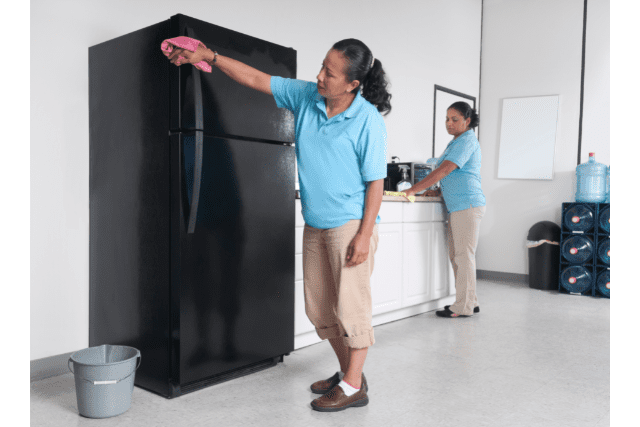
- Wipe down all external surfaces including the top and sides of the fridge.
- Organize items by type; group condiments, dairy, drinks, and meals for easy access.
Fridge Cleaning Frequency: How Often is Enough?
Most offices should schedule a thorough fridge cleaning at least once a month. High-traffic workplaces, or those with multiple shifts, may need to clean every two weeks or even weekly. Small offices with low usage can go longer if everyone follows best practices, but a visible cleaning calendar prevents confusion and ensures accountability.
| Office Size | Usage Level | Cleaning Interval |
|---|---|---|
| Small (1–10) | Light | Every 4–6 weeks |
| Medium (11–40) | Moderate | Monthly |
| Large (41+) | Heavy / Multi-shift | Every 1–2 weeks |
What Should Never Go Back in the Office Fridge?
Take this opportunity to reinforce office fridge do’s and don’ts:
- Anything unidentifiable or expired
- Uncovered or unlabeled containers
- Open cans (transfer contents to sealed containers)
- Spilled, leaking, or sticky containers
Labeling and dating leftovers is always a smart practice and helps everyone know what is safe to keep.
Preventing Odors: Proactive Maintenance Tips
Even with regular cleaning, office fridges can quickly develop persistent odors. Prevention strategies include:
- Placing an open box of baking soda inside to absorb smells
- Encouraging staff to take home food before weekends/holidays
- Regularly wiping up small spills and leaks as they happen
- Assigning a “fridge monitor” to spot-check cleanliness weekly
For stubborn odors, place a shallow bowl of activated charcoal or coffee grounds inside (changed weekly), and see tips for dealing with office odors for further help.
Hygiene and Cross-Contamination: Reducing Health Risks
Shared fridges present real risks for cross-contamination between raw items and ready-to-eat foods. Best practices include:
- Designating separate areas for raw and cooked foods
- Keeping uncooked meats/eggs on the lowest shelf (never above other foods)
- Washing hands before and after using the fridge
- Regularly cleaning handles, especially during cold/flu season (See office germ prevention)
What Products Are Safe for Food-Contact Surfaces?
Food safety is paramount. Opt for fragrance-free, food-safe products whenever possible. For daily wiping, diluted vinegar solutions or baking soda work well, but always check manufacturer guidelines first. The EPA Safer Choice program helps you find cleaning agents that perform well without harmful residues.
- Avoid bleach on interior surfaces (unless food is removed and surfaces rinsed thoroughly)
- Never mix cleaning agents
- Use only towels dedicated for food contact areas (not the bathroom or general janitorial use)
Seasonal Considerations: Dealing with Holidays and Busy Periods
Major holidays and special events can stress fridge capacity with an influx of party leftovers, shared treats, or catering trays. Take proactive steps:
- Remind staff to clear personal items before extended breaks
- Schedule an extra deep clean after company events (office party cleaning tips)
- Assign someone to monitor for excess items before the weekend
Shared Responsibility: Building a Routine That Works For Your Team
The best office refrigerator stays clean when everyone shares responsibility. Try these frameworks:
- Assign fridge duty on a rotating calendar
- Appoint a “fridge captain” each month
- Encourage team leads to set and uphold standards
- Display a shared cleaning checklist in the break room or kitchenette
Ready-made checklists and reminders can be sourced from guides such as this office kitchen cleaning resource.
Professional Support: When To Hire a Cleaning Company
Busy offices or those with strict hygiene requirements (healthcare, education, childcare) may benefit from outside support. Professional teams like Quick Cleaning:
- Bring food-safe products and consistent checklists
- Offer flexible deep cleaning options for appliances
- Help reduce cross-contamination and compliance risks
- Customizable schedules for kitchens, breakrooms, and common areas
Office cleaning service is ideal for organizations prioritizing health and safety. For unique facility needs, consider solutions available for specialized cleaning support.
Sample Checklist: Office Fridge Cleaning Steps At-a-Glance
- Alert staff before cleanout day
- Gather cleaning materials (gloves, cleaners, cloths)
- Empty contents, discard questionable items
- Remove shelves and bins, wash and dry
- Wipe fridge interior and seals
- Clean doors and handles
- Replace shelves, arrange food, label items
- Log the cleaning date and assign next duty
Downloadable templates and supply lists can be found in this supply guide.
Integrating Fridge Cleaning with Broader Office Hygiene
The fridge isn’t the only high-touch area at risk. Incorporate fridge cleaning into a workplace hygiene strategy that includes microwaves, sinks, dish racks, and trash areas. Examples include:
- Regular wipe-down of all kitchen surfaces after lunch hours
- Disinfecting coffee makers, water coolers, and shared appliances
- Promoting hand hygiene with informative posters (CDC handwashing facts)
- Addressing overlooked cleaning zones (see overlooked office areas)
Adapting for Specialty Environments: Healthcare, Education, More
Certain settings require adjusted fridge protocols. In healthcare, educational, or childcare offices:
- Clean and sanitize fridges more frequently—at least weekly
- Maintain strict monitoring of temperature and food safety
- Utilize logs or checklists for every clean
- Replace fridge door gaskets and seals promptly if damaged
Professional cleaning solutions for these environments are often required by regulation and benefit from checklists tailored to specific risks.
Common Obstacles: Solving Everyday Fridge Cleaning Challenges
- Disputes over ownership: Encourage labeling. After warnings, unclaimed food must go.
- Odors that won’t leave: Rewash all interior parts, remove the fridge back panel to check for spills, and place baking soda, activated carbon, or coffee grounds for a week.
- Missed cleanings: Display a completed checklist. Reward on-time cleanings with small incentives (e.g., coffee gift cards).
FAQ: Office Fridge Cleaning
- How often should our office fridge be cleaned?
- Assuming average use, monthly deep cleaning is ideal. Large or high-traffic offices may need biweekly scheduling, especially if the fridge is frequently full or prone to spills.
- What is the safest cleaning product for office fridges?
- Use mild dish soap or EPA Safer Choice-certified multi-purpose cleaners. Always avoid harsh chemicals or bleach on interior surfaces unless you rinse thoroughly and the area airs out before food is stored again.
- Is unplugging the fridge necessary?
- Not always, but unplugging is helpful if a deep clean involves removing shelves and keeping the door open for more than 20 minutes; always warn staff before doing so.
- How can we stop coworkers from leaving food for weeks?
- Implement labeling and a “cleanout warning” email system. Make it routine that all unclaimed or expired items are discarded each month.
- Can professional cleaners sanitize fridges?
- Yes. Most professional cleaning teams, including Quick Cleaning, have experience with office kitchen appliances and will follow strict hygiene protocols for these jobs.
- Should vegan and allergy-free foods be stored separately?
- It’s best. Assign dedicated shelves or bins for special dietary needs when practical, reducing cross-contamination risks.
- Are there landlord or OSHA rules for office fridges?
- OSHA does not specifically regulate office fridge cleanliness, but employers have a general duty to provide a safe workplace, which includes reducing foodborne and bacterial hazards.
- What should we do about recurring spills or leaks?
- Thoroughly wipe and disinfect the area immediately; inspect for cracks or damaged containers that can cause repeat problems.
- How to handle shared fridge in a multi-tenant office?
- Establish building-wide rules, designate shared responsibilities, and consider frequent professional cleaning. See more in this multi-tenant office cleaning guide.
- Can storing too much food damage the fridge or pose risks?
- Yes. Overfilling restricts airflow, leading to uneven cooling and faster spoilage, creating a higher risk of bacteria growth.
Office Fridge Hygiene: Final Tips and Next Steps
Properly cleaning your office fridge equals more than just eliminating odors—it’s about protecting everyone’s health and showing care for your workplace community. Regular cleanings, clear rules, the right products, and shared responsibility will ensure your fridge stays safe and efficient. For large or demanding workplaces, consider integrating professional cleaning services and comprehensive hygiene programs for best results.
About Quick Cleaning
Quick Cleaning helps households and businesses in Chicago, Illinois, and surrounding areas keep their spaces clean, safe, and welcoming. Our expert team specializes in recurring house cleaning, deep cleaning, move out cleaning, professional office cleaning, and specialized facility cleaning. We use proven checklists, trained staff, and the right products to ensure quality results every time. From routine breakroom maintenance to detailed facility cleaning, rely on Quick Cleaning as your local cleaning partner for healthier living and working environments.
frost-free refrigerator overview, cleaning services chicago il, office cleaning services, office cleaning, Riverside office clean service, office cleaning in Bucktown IL, Hillside office clean service, Elgin office cleaning, office clean Cedar Lake, office cleaning in Franklin Park, office cleaning Glencoe