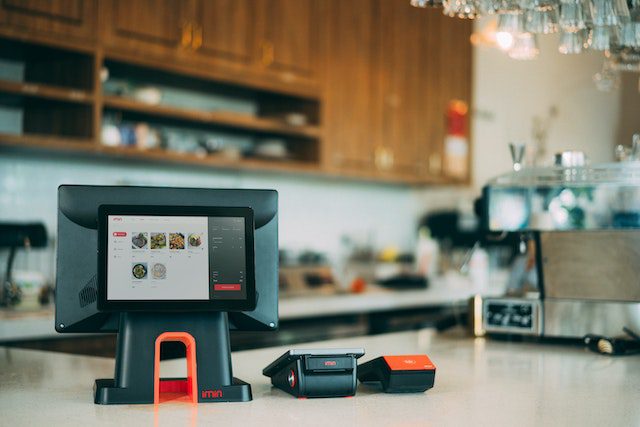
The Complete Framework for Cleanliness And Order At The Point Of Sale
Cleanliness And Order At The Point Of Sale directly shape first impressions, brand trust, and sales outcomes. Whether you’re managing a bustling retail boutique, a convenience market, or a service counter, every aspect of orderliness influences how customers experience your business. In this guide, you’ll find a step-by-step framework to assess, plan, and maintain cleanliness and order at the point of sale. We’ll cover hygiene standards, essential routines, employee checklists, space organization, safety protocols, and what to expect when working with a professional cleaning company—all grounded in best practices for Chicago’s dynamic commercial landscape. Let Quick Cleaning’s practical expertise guide your journey to a spotless, customer-ready point of sale.
Understanding Cleanliness And Order At The Point Of Sale
At the point of sale—whether a cash register, self-checkout, counter, or dedicated service area—cleanliness and order aren’t just about surface appearance. They reflect your commitment to health, safety, professionalism, and brand reputation. Factors that contribute to optimal standards include:
- Visible surface neatness (dust, fingerprints, debris)
- Well-organized displays and accessible payment systems
- Absence of food, trash, or clutter behind counters
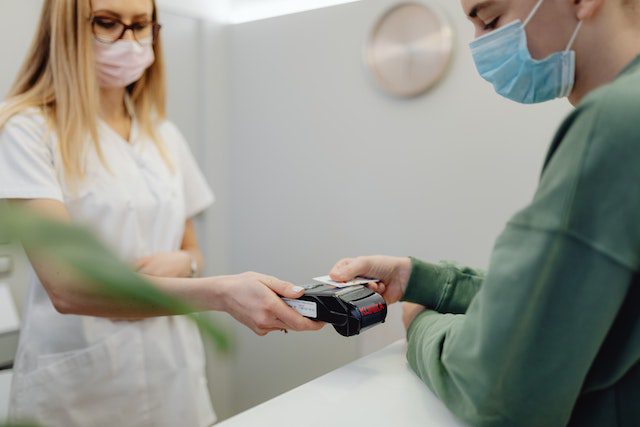
- Consistent disinfection of high-touch points (keypads, pens, trays, registers)
- Clearly marked, unobstructed traffic flow for staff and customers
When customers encounter a clean, organized point of sale, they’re more likely to trust your staff, complete a purchase, and return for future visits.
Impact of a Spotless Point Of Sale on Customer Experience
Research and industry studies consistently link retail hygiene to positive customer perceptions. Here’s how:
- Trust and comfort: A tidy cashier station signals attention to detail and care for customer safety.
- Less hesitation: Clean payment areas reduce doubts about handling money, merchandise, and shared surfaces.
- More efficient transactions: Order reduces bottlenecks, misplaced items, and confusion during checkout.
- Brand advantage: Cleanliness at the point of sale sets you apart in a competitive Chicago marketplace.
Essential Elements That Define Cleanliness And Order At The Point Of Sale
- Disinfected Surfaces: Regular cleaning of counters, cash registers, card readers, and merchant devices.
- Organized Tools & Materials: Pens, bags, wrapping, and signage neatly arranged for staff efficiency.
- Stocked Supplies: Easy access to wipes, sanitizer, and change for uninterrupted service.
- Uncluttered Space: Clear pathways, inventory below counters, personal items stored out of sight.
- Display Maintenance: Product samples and baskets wiped down and replaced as necessary.
Comparison Table: Standards for Point Of Sale Cleanliness
| Element | Baseline Clean | Optimal Standard |
|---|---|---|
| Surface appearance | Minimal visible dust or litter | Spotless, shiny, freshly wiped |
| Touchpoint hygiene | Wipes available | Disinfected every shift |
| Organization | Items present but not in order | Labeled, grouped, minimal excess |
| Trash/recycling | Bins not overflowing | Emptied on schedule, sanitized |
| Staff supplies | On hand | Accessible, monitored, neatly stored |
Establishing a Daily Cleaning Checklist for the Point Of Sale
Consistency is key for retail or customer-facing teams. Below is a sample daily checklist:
- Sanitize all counters and register surfaces at start, mid, and end of shift
- Wipe card readers, touchscreens, shopping basket handles
- Refill hand sanitizer and single-use supplies
- Remove trash, wrappers, and personal items
- Arrange promotional materials, signage, and pens
- Check for hazards (spills, tripping risks) and address immediately
- Inspect for dust or smudges on displays and glass
Personalize this checklist based on your traffic and store layout. Consistent routines foster team accountability.
Organizational Principles for Maintaining Order at High-Traffic Points of Sale
Order is more than simple tidiness—it’s a system designed for functionality. Key principles include:
- Zone designation: Define separate areas for checkouts, returns, packaging, and personal staff items.
- Minimalism: Keep only frequently used tools within arm’s reach; store the rest.
- Clear pathways: Avoid blockages or abandoned carts near the register.
- Labeling: Use visible labels for cords, bags, and supply drawers.
- Visual management: Charts or color coding can signal replenishment needs at a glance.
The Role of Staff Training in Sustaining Cleanliness At the POS
Well-structured training programs empower your employees to maintain high standards efficiently. Consider integrating:
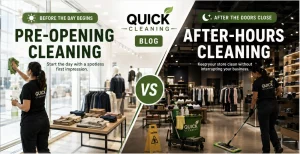
- Brief, practical SOPs for daily opening/closing cleaning routines
- Role-specific checklists for cashiers, managers, and cleaners
- Safety reminders—glove use, handwashing, proper disposal of wipes
- Visual “before/after” standards to calibrate expectations
- Incentives or recognition for exemplary tidiness
When new cleaning protocols roll out, brief your entire team to ensure compliance and accountability.
Adapting Cleanliness Standards to Seasonal Challenges
Chicago’s weather brings specific cleaning challenges—snow, mud, slush, pollen, and salt residues can accumulate at entrances and around payment areas.
- Use mats and frequent entry area cleaning in winter and rainy seasons
- Increase dusting and wiping during dry, high-pollen months
- Monitor for tracked-in debris throughout the day—not just at opening/closing
- Regularly clean HVAC vents to prevent dust accumulation at the point of sale
Tailor frequency and methods as traffic and weather change throughout the year.
High-Touch Areas: Critical Focus Within Your Point Of Sale
Some surfaces and tools see constant hand contact. Prioritize cleaning:
- Keypads, touchscreen monitors, and styluses
- Cash trays and coin dispensers
- Shopping basket/cart handles if stationed nearby
- Pens, loyalty card readers, and gift card slots
- Any bells or call buttons
Disinfect these touchpoints during every shift using EPA-registered products for maximum safety. For reference on best practices in surface disinfection, resources such as the Association for Professionals in Infection Control and Epidemiology provide educational materials tailored to critical cleaning requirements.
Integrating Sustainability into Point Of Sale Cleanliness
Orderly cash wraps can also be eco-friendly. Tips for greener operations include:
- Select reusable microfiber cloths and refillable sanitizer dispensers
- Sort and recycle packaging, paper, and cardboard in accessible bins
- Choose cleaning agents with minimal environmental impact where possible
- Train staff to reduce single-use plastics and excessive printouts
The EPA’s guidance for reducing workplace waste can spark fresh ideas for your store’s order and environmental stewardship.
Benchmarking Your Store: Auditing Cleanliness And Order at the POS
Periodic self-audits help maintain high standards. Here’s a simple process:
- Download or create a detailed inspection sheet
- Assign a manager or trusted staffer to conduct weekly walk-throughs
- Rate each POS element for visibility, touchpoint cleanliness, organization, and supply stock
- Document improvements needed, recurring issues, and action steps
- Reward consistency and address gaps in the next team meeting
Self-auditing supports operational discipline, mitigates risks, and reinforces your store’s brand values.
The Role of Professional Cleaners: What to Expect at the Point Of Sale
Many Chicago businesses supplement staff routines with professional cleaning services, especially during seasonal rushes or when in-house standards slip. Benefits include:
- Specialized tools for deep cleaning registers, glass, and surrounding display surfaces
- Trained crews to remove stains, dust in hard-to-reach areas, and persistent odors
- Scheduled cleaning that doesn’t disrupt POS operation hours
- Detailed reporting after each treatment, so benchmarks are transparent
For scenarios like move-out, deep cleaning, or addressing specific facility needs, companies such as move-out cleaning experts or deep cleaning teams can restore point of sale areas to peak standards. Always verify their protocols align with your store’s daily rhythm and compliance needs.
Checklist: Steps for Daily and Weekly Orderliness at the POS
- Begin each workday with a full wipe and inspection of checkout counters
- Position supplies (bags, sanitizer, pens) for visible, easy access
- Check floors, mats, and trash bins at least once every two hours
- Refresh product displays and remove expired promotional material
- Document all incidents—spills, misplaced items, or customer complaints about hygiene
- Every week: deep clean under counters and restock all cleaning agents
- Reiterate cleanliness expectations during daily huddles or team meetings
Common Retail Scenarios: Tailoring Cleanliness And Order Strategies
- High-traffic grocery: Add cleaning spot checks every hour to prevent build-up.
- Specialty retail (jewelry, tech): Use glass-safe cleaners and avoid cluttered displays near registers.
- Pop-up and seasonal kiosks: Rely on compact cleaning kits and digital checklists for temporary setups.
- Multi-user checkout areas: Assign closing duties to last user of each register; rotate tasks fairly.
- Hybrid payment/self-serve: Increase cleaning frequency for shared touchscreens and bagging stations.
Selecting a Cleaning Partner for Your Point Of Sale Needs
If considering outside help, evaluate cleaning companies on:
- Experience with retail or similar customer-facing spaces
- Use of appropriate, safe products for electronics and surfaces
- Flexible scheduling (before/after hours, same day on request)
- References from similar Chicago locations
- Transparent reporting and willingness to address custom needs
For particular use cases, like retail cleaning or office cleaning service, choose providers familiar with both routine and deep cleaning solutions.
Integrating Cleaning And Order With Retail Operations Technology
Modern stores increasingly leverage digital tools to maintain order:
- Mobile apps for cleaning schedules and supply inventory
- Digital checklists with time-stamped completion markers
- Automated reminders for recurring duties and restocks
- Cameras (with privacy compliance) to monitor congestion, trash, or abandoned items
- Smart POS systems that alert staff to downtime for cleaning
Technology supports consistency, real-time accountability, and documentation that managers can review at any time.
Addressing Hygiene and Compliance Requirements
Certain environments—food counters, pharmacies, and facilities with regulatory oversight—require validated procedures. To ensure your point of sale meets relevant standards:
- Consult with the appropriate regulatory agency (state or city) for up-to-date retail hygiene requirements.
- Document all cleaning activities, corrective actions, and staff training sessions.
- Display required health and hygiene signage at the POS to reassure customers.
- Periodically review and update protocols, especially after public health advisories.
For further reading on distinguishing between surface cleaning and true disinfection, visit the cleaning vs. disinfecting guide.
Frequently Asked Questions About Cleanliness And Order At The Point Of Sale
- What’s the recommended frequency for sanitizing the point of sale?
- Sanitize POS surfaces at least at the start and end of each shift, with extra wipes after peak periods or visible contamination.
- Which areas are most often overlooked during routine checkout cleaning?
- Commonly missed spots include card machine keypads, supply drawers, the undersides of counters, and the area around trash bins.
- What cleaning products are safe for digital and electronic POS equipment?
- Always use manufacturer-approved disinfectant wipes—avoid oversaturation near screens or keypads. Professional cleaning companies use specialized, non-abrasive solutions.
- How do professional cleaning checklists differ from in-house routines?
- Professionals often include deep cleaning of crevices, display fixtures, under-counter spaces, and schedule regular audits for continued compliance.
- How should staff handle accidental spills or contamination at the register?
- Immediately cordon off the area, remove contaminants using gloves and EPA-approved products, then restock as needed before resuming service.
- Does customer traffic dictate the need for more frequent cleaning?
- Yes. High footfall requires increased touchpoint disinfection, more frequent trash removal, and extra spot checks at busy times.
- How can stores ensure order at self-checkout and hybrid terminals?
- Install clear markers and signage, restock supplies at each station, and assign regular checks to monitor for spills or abandoned items.
- Are there risks to using scented cleaning products at the checkout?
- Fragranced products may cause allergic reactions or discomfort; use mild, hypoallergenic agents and ventilate the area as needed.
- What’s the role of audits, and can they be done internally?
- Audits help maintain standards and can be performed internally for routine checks, or by third-party specialists for compliance assurance.
- Is there any guidance for reducing cleaning waste at the POS?
- Choose reusable cloths where possible, implement recycling at the checkout, and consult EPA recommendations for sustainable practices.
Summary: Setting Your Store Up for Lasting Cleanliness And Order
Achieving and maintaining Cleanliness And Order At The Point Of Sale requires a detailed, actionable approach. By following dedicated daily checklists, training staff, auditing processes, adapting to seasonal demands, and leveraging the expertise of professional cleaning partners, any retail or service organization can ensure their customers have a safe, pleasant checkout experience. Regular attention to sustainability, compliance, and technological integration only further strengthens your operational excellence. For deeper strategies, check store cleaning strategies and engage with topic hubs such as best practices for cleaning for expanded knowledge.
About Quick Cleaning
Quick Cleaning specializes in residential and commercial cleaning for households and businesses across Chicago, Illinois, and nearby regions. Our trained teams bring expertise in recurring house cleaning, deep cleaning, move-out cleaning, office and specialized facility cleaning. With a focus on consistent checklists, flexible scheduling, and transparent communication, we help clients keep their environments healthy, safe, and welcoming. Contact Quick Cleaning for tailored recommendations or to explore how our routines elevate your point of sale spaces.


traffic,, chicago cleaning services, storefront cleaning, retail janitorial services chicago, retail cleaning Westmont IL, boutique cleaning Vernon Hills, boutique cleaning Lake Forest, boutique cleaning West Loop, store cleaning Wood Dale IL, storefront cleaning Palos Hills IL, retail janitorial services Bannockburn