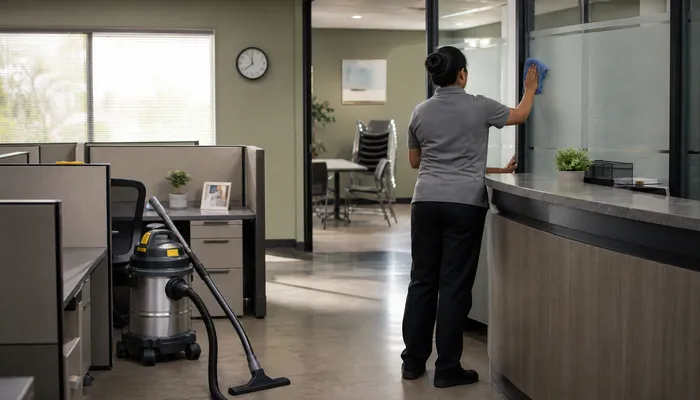
An office cleaning checklist only earns its keep when it matches the building it was written for. In the DuPage County suburbs that wrap around O’Hare International Airport, that usually means a mix of small administrative suites, light-industrial offices, clinics and service businesses, each with a different traffic pattern and a different idea of what a properly cleaned office should look like by Monday morning. This guide covers what belongs on the list, how often each zone needs attention, how the mix shifts from one town to the next, and what to ask before you hand a set of keys to anyone.
We are Quick Cleaning, a Chicago cleaning company that has worked in homes and commercial spaces since 2010, and most of the offices we serve in this corridor are small enough that no one holds a facilities title. The list is usually kept by whoever notices the break room first. That is exactly why it is worth writing down properly.
Why Offices Around O’Hare Run on Their Own Schedule
Illinois is the sixth-most-populous state in the country, with an estimated 12.7 million residents according to Census Reporter’s Illinois profile of the Census Bureau’s 2023 five-year estimates. Most of that activity concentrates in the Chicago metro, and one of its busiest working edges is the suburban band just west of the airport. Illinois is a Midwestern state that borders Lake Michigan, with Chicago as its largest city and Springfield as its capital, and this corridor is where its road, rail and air networks overlap most densely. Bensenville sits closest to the airfield, with Elmhurst, Glendale Heights, Itasca and Wood Dale spread along the same belt of office parks, small commercial buildings and neighborhood business districts.
In practice, that means offices here do not keep one tidy 9-to-5 rhythm. A freight-forwarding office may open at five in the morning and empty out by three. A dental practice sees a full waiting room at eight and again at four. A two-person insurance office is locked and dark by six. A checklist that assumes everyone works the same hours will keep missing the rooms that actually get used.
What Belongs on an Office Cleaning Checklist
The most useful lists are built by zone rather than by room name, because zones tell a cleaner what to do first when time is short. These are the areas almost every office in this corridor needs written down.
- Entry and reception. Door glass, push plates, the front counter and the mat at the threshold take more contact than any other square foot in the building, and from December through March they also take road salt. This zone is usually worth touching on every single visit.
- Workstations and shared desks. Keyboard trays, monitor stands, phone handsets and the desk edges people lean on. The goal is not a showroom look; it is a clean start to the morning without moving anyone’s papers or personal items.
- Meeting rooms. Table surfaces, chair arms, whiteboards, cables and the glasses left behind from the last call. A quick reset before a booked meeting saves more embarrassment than a deep clean on Friday afternoon.
- Break room and kitchenette. Counters, sink, microwave interior, refrigerator handles, cabinet fronts and the bin area. This is typically the first zone to look neglected and the last one anyone volunteers to handle at the end of a shift.
- Restrooms. Fixtures, dispensers, partitions, floors and the door hardware on the way out. Frequency matters more than intensity here, and the list should say so explicitly instead of leaving it to interpretation.
- Floors, glass and repeated touchpoints. Vacuuming, hard-floor mopping, interior glass, light switches, stair rails and elevator buttons. Dust settles on high ledges and comes back down onto horizontal surfaces, which is why the EPA’s indoor air quality guidance treats source control and ventilation as part of the same conversation.
Building a Weekly Office Cleaning Checklist That Holds Up
Once the zones are named, the second decision is cadence. A workable list assigns every task to a frequency so nothing depends on someone remembering it. The table below is a starting point we adjust to each building’s hours and traffic. It is a planning aid, not a fixed package.
| Zone | Every visit | Weekly | Monthly |
|---|---|---|---|
| Entry and reception | Glass, handles, mat, counter | Door frames and kick plates | Light fixtures and vents |
| Workstations | Desks, touchpoints, waste | Under-desk vacuuming | Monitor stands and cable trays |
| Meeting rooms | Table, chairs, board | Glass and screens | Chair bases and storage |
| Break room | Counters, sink, bins | Microwave and fridge interior | Cabinet fronts and appliance exteriors |
| Restrooms | Fixtures, dispensers, floors | Partitions and grout lines | Drains and vent covers |
If your office also runs late, a scheduled after-hours window usually beats squeezing tasks into the middle of the workday. We wrote about that trade-off separately in the benefits of a night office cleaning service, and the short version is that an empty building lets a crew move faster and finish the floors without traffic.
Match the List to the Town You Work In
The same list does not fit every town in this corridor, even though the towns sit minutes apart. Five patterns we see regularly:
- Bensenville. Proximity to the airport shapes the working day. Offices tied to freight, catering, staffing and ground services often start before sunrise, so entry glass and restrooms work better when they are front-loaded rather than left for the end of the shift.
- Itasca. Office parks and administrative suites here tend to run a conventional schedule with a heavy meeting load, which pushes conference-room resets and interior glass ahead of general dusting.
- Glendale Heights. Many buildings hold small practices and back-office suites where one desk doubles as the reception counter. A shorter list done consistently beats a long list done unevenly.
- Wood Dale. Service businesses with a shop or storage area attached track in a different kind of dirt: grit, cardboard dust and floor debris that reaches the front office by mid-morning. The list should name where the office ends and the work area begins.
- Elmhurst. Downtown suites above storefronts share entrances and stairs with neighboring businesses, which makes common-area floors and handrails part of the office list rather than somebody else’s problem.
What to Ask Before You Hand Over the Keys
A written scope is the difference between a cleaned office and a weekly argument. Whoever you hire, the conversation should cover the same ground:
- Which zones are included, and which are explicitly not.
- Who supplies products and equipment, and whether any surface needs a specific product.
- How trash and recycling leave the building, and where bins are staged.
- How access works after hours: keys, fobs, alarm codes and who gets called if something is left armed.
- How quality is verified on the spot, and what happens when something is missed.
- Whether the crew is insured, bonded and employed rather than subcontracted job by job.
At Quick Cleaning we answer those questions the same way every time. Commercial crews are insured and bonded, background-checked W-2 employees rather than freelancers, and commercial work carries $2 million in liability coverage. Every visit is closed out against the Certified Clean Checklist, missed items reported within 24 hours are followed up subject to service terms, and the work sits under The Certified Clean Guarantee™. Sixteen years in this market is also why the walk-through at the end usually takes less time than the one at the start.
If you want to compare timing options before committing, what is the best time to clean your office lays out the trade-offs between before-hours, after-hours and daytime service.
Keeping the Checklist Alive Between Visits
An office cleaning checklist that lives in a drawer stops working within a month. Three habits keep it useful: give each zone an owner inside the office so the break room has a name attached to it, keep a short daily reset that takes ten minutes rather than an hour, and note anything unusual such as a spill, a repair or a new piece of equipment where the crew will actually see it. The scheduled visit then handles the heavy work instead of catching up on two weeks of small ones.
It also helps to think about what a well-kept office does for the business itself. How cleaning helps to increase the value of your business covers that angle from the operations side.
Frequently Asked Questions
Does every office in the O’Hare corridor need its own checklist?
No two buildings need identical wording, but the zones are similar. What changes is cadence and emphasis: a clinic with a waiting room needs different restroom and touchpoint frequency than a four-desk engineering office, and a suite in a shared downtown building needs common-area items that a standalone building does not.
What separates a daily task from a weekly one?
Daily tasks are the ones a visitor notices immediately: entry glass, restrooms, counters, bins and the floors people walk through. Weekly tasks build up slowly, such as under-desk vacuuming, microwave interiors and partition wiping. Monthly tasks are the detail layer, meaning vents, grout, appliance exteriors and high ledges.
How do Illinois seasons change the list?
Winter adds salt, slush and grit to entries and hard floors, so mats and vestibules need more frequent attention from December through March. Spring brings pollen and leftover road sand through the same doors. Summer puts extra load on break-room surfaces and interior glass. The zones stay the same; the frequency moves with the season.
Are the population figures in this article exact?
No. The state figure comes from the Census Bureau’s 2023 five-year estimates, published through Census Reporter, and estimates carry a margin of error. We use it only as background for how large the metro market is, never as a claim about a single office or town.
How do we move from a written list to a scheduled service?
Start with the walk-through. Someone from the crew looks at the space with you, marks the zones that matter most, notes access and hours, and writes the scope against the list you already built. From there the schedule can be daily, several times a week, weekly or monthly, depending on traffic and how the office is used.
If the office is in Elmhurst and you are also sorting out the residential side of things, whether a rental turnover, a family home or a listing that needs to show well, our Maid Service and House Cleaning in Elmhurst, IL page covers the residential work we run in that town, held to the same crew standard we bring into a commercial suite. For anything else along the corridor, from Bensenville to Wood Dale, the fastest way to a scope and a price is a short call: our team answers around the clock at (773) 644-5568, and we will tell you honestly whether the list you already have is doing its job.