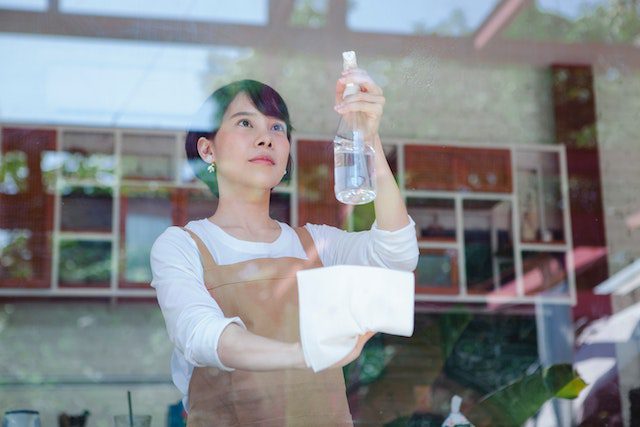
Cleaning and Disinfection Guide for Commercial Premises: Professional Standards & Best Practices
Cleanliness in commercial spaces isn’t just about appearance—it’s essential for health, productivity, and trust. As workplaces in Chicago and beyond navigate evolving hygiene expectations, understanding a rigorous cleaning and disinfection guide for commercial premises becomes an urgent necessity. This in-depth resource walks you through core concepts, industry checklists, and expert process essentials, so your workplace consistently meets the highest standards.
The Science Behind Cleaning and Disinfection in Commercial Spaces
Effective commercial hygiene starts with distinguishing cleaning from disinfection. Cleaning removes visible soils, dust, and debris—while disinfection inactivates or destroys microorganisms on surfaces. Each step serves a specific function and, in combination, creates the best protection for staff and visitors.
- Cleaning: Manual removal of dirt and organic matter using detergents—critical for surface preparation before disinfection.
- Disinfection: Application of chemical agents, like EPA-registered disinfectants, to inactivate pathogens by contact time.
- Why sequence matters: Disinfectants work best on pre-cleaned surfaces; dirt can block the contact needed for microbial kill.
The core principle: cleaning first, then disinfecting, is necessary for high-touch surfaces and areas of concern in any commercial setting.
Understanding Regulatory Standards and Industry Guidelines
Compliance isn’t optional. Commercial premises face local, state, and industry regulations covering cleanliness and infection control. OSHA, CDC, Illinois Department of Public Health, and local standards all inform what is required, including:
- Documented cleaning protocols for employee and public areas
- Use of EPA-registered disinfectants (see EPA Safer Choice for options)
- Training and PPE use for staff performing cleaning or disinfection tasks
- Special guidance for high-risk facilities (medical, dental, childcare)
Consult authoritative resources and match your practices to legal requirements. Failing to comply can result in fines and reputational risk.
Risk Assessment: How to Evaluate Cleaning Needs in Your Facility
No two commercial spaces are the same. Start by mapping out areas that require different cleaning frequencies or protocols:
- Identify high-touch surfaces: Door handles, elevator buttons, shared equipment, breakroom fixtures, POS terminals.
- Traffic and usage analysis: Areas with high occupancy or public use (reception, washrooms) demand more frequent attention.
- Special facility requirements: Medical, dental, food-service, and other regulated environments have unique standards. See industry cleaning standards for more detail.
- Material compatibility: Know which cleaning/disinfection methods are safe for each surface (e.g., electronics, upholstery, wood).
Document these zones and their requirements. This forms the foundation of a defensible cleaning and disinfection program.
Disinfectant Selection: What Works for Commercial Premises?
The right product matters. Choose disinfectants approved for commercial use, with proven efficacy against relevant pathogens (bacteria, viruses, fungi).
- Check EPA registration numbers for all products (EPA Safer Choice list for safer commercial alternatives).
- Consider contact (dwell) time: Some require up to 10 minutes to be effective—track this in your procedures.
- Surface safety: Certain chemicals can damage sensitive finishes or leave harmful residues; always review product compatibility.
- Green cleaning: Inquire about non-toxic or reduced-emission alternatives if sustainability or indoor air quality is a concern.
Train staff on safe handling, dilution, and storage of all chemicals to ensure both effectiveness and workplace safety.
Comprehensive Cleaning and Disinfection Checklist for Commercial Buildings
An effective cleaning and disinfection guide includes actionable lists for every major facility zone. Below is a structured framework to help organize routines for office, retail, and specialized spaces.
| Area | Cleaning Tasks | Disinfection Tasks | Frequency |
|---|---|---|---|
| Reception/Lobby | Dust, vacuum, spot-clean glass | Handles, counters, seating arms | 2–3x/day |
| Offices/Workspaces | Dust, wastebasket change, wipe monitors | Desks, phone handsets, keyboards | Daily |
| Restrooms | Clean toilets, sinks, replenish supplies | All touch surfaces, dispensers | Several times/day |
| Break Rooms | Wipe tables, fridge handles, empty trash | Appliance buttons, sink fixtures | 2x/day |
| Meeting Rooms | Clean tables, chairs, remote controls | Phone/intercom, shared screens | After each use |
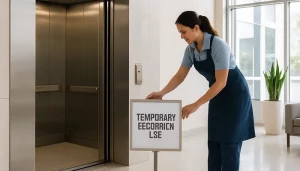
| Elevators/Stairs | Sweep floors, spot-clean walls | Buttons, rails | Several times/day |
| High-Traffic Floors | Vacuum, mop | None (unless spills/exposure) | Daily/As needed |
Customize this checklist for your specific facility needs. For a deeper look, see our detailed Commercial Cleaning Checklist.
Critical High-Touch Surfaces: What to Prioritize
- Door handles and push plates
- Light switches and elevator buttons
- Countertops, meeting tables
- Shared equipment: printers, hand tools, phones
- Restroom fixtures: faucets, flush handles, dispensers
- Breakroom appliances: fridge, microwave, vending controls
Focus your disinfection schedule on these touchpoints—especially during cold/flu season, after known illness, or in high-occupancy periods.
Tailored Protocols for Specialized Commercial Facilities
- Medical/Dental Clinics: Follow CDC and ADA infection control protocols; isolate and deep-clean operatory rooms after high-risk procedures. For practical guidelines, review our Dental Office Cleaning Services and Medical Office Cleaning Services pages for recommendations.
- Childcare, Education Spaces: Focus on toys, classroom materials, and handwashing stations; use non-toxic disinfectants. See Education Cleaning Services for more tips.
- Retail & Hospitality: Prioritize checkout counters, fitting rooms, and customer washrooms; rotate supply replenishment.
- Food Service Kitchens: Disinfect food contact and non-food contact surfaces separately; follow FDA food safety standards. Learn more from our Commercial Kitchen Cleaning Tips.
Never use a “one size fits all” checklist—ensure your protocols match the function and risk profile of each commercial zone.
Scheduling and Frequency: Building an Effective Cleaning Calendar
Frequency turns a plan into results. Map your cleaning schedule to occupancy peaks, risk levels, and special events:
- Daily/Multiple times daily: Restrooms, entrances, high-traffic surfaces
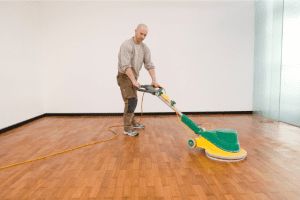
- Weekly: Deep cleaning of office areas, detail work on windows, thorough floor care
- Monthly/Quarterly: HVAC vent cleaning, upholstery shampoo, wall washing
- Ad hoc: After sickness outbreaks, construction projects, inclement weather
See our insights on Benefits of Daily Commercial Cleaning and Importance of Commercial Cleaning.
Staff Safety and Training: Best Practices for Commercial Cleaning Teams
- Provide and require personal protective equipment (PPE) including gloves, masks, and eye protection as needed.
- Train on chemical safety—proper dilution, application, and what to do in case of spills/exposure.
- Emphasize hand hygiene before and after routine cleaning.
- Adopt color-coded tools or clear labeling to avoid cross-contamination between restroom, kitchen, and general surfaces.
- Train staff on emergency procedures and signage for recently disinfected zones.
Document staff training and regularly refresh with updated guidance. For advanced strategies, refer to our resource: How to Avoid Cross-Contamination.
Cross-Contamination: Preventing Spread During Cleaning
- Use separate cloths/mops for bathrooms versus general spaces.
- Replace or wash cleaning equipment at regular intervals.
- Sanitize cleaning carts and supply bins.
- Change gloves and wash hands between zones.
- Emphasize a “clean to dirty” workflow—start in the cleanest area, end with restrooms or highest-risk spaces.
Develop a checklist and monitor compliance. Find in-depth discussion at How to Avoid Cross-Contamination.
Green Cleaning and Sustainability in Commercial Operations
More businesses are seeking cleaning protocols that minimize environmental and health impacts. Consider:
- Use of EPA Safer Choice-certified products
- Microfiber cleaning cloths for reduced chemical use
- Waste reduction: concentrate refills, reusable equipment
- Indoor air quality considerations: limit strong fragrances or VOCs in shared spaces
For practical tips and benefits, read Green Cleaning for a Healthy Environment.
Decision Framework: Choosing a Commercial Cleaning Partner
Not all commercial cleaners bring the same level of expertise or accountability. To select the right partner:
- Review references and look for documented experience with similar facility types
- Request their standard cleaning and disinfection checklists
- Confirm training, certifications, and insurance (bonded staff, liability coverage)
- Discuss flexibility in scheduling and how they communicate about changes or incidents
- Ask whether staff are familiar with local, state, and federal cleaning regulations
For a full breakdown, see How to Find Commercial Cleaning Services.
Measuring Performance: Quality Assurance and Documentation
- Schedule routine inspections—use checklists to assess compliance and thoroughness.
- Keep written logs of cleaning/disinfection activity (especially for high-risk or regulated settings).
- Solicit feedback from occupants and facility managers to identify recurring gaps.
- Establish procedures for rapidly addressing incidents (spills, illness, emergencies).
A rigorous auditing process supports accountability and keeps your premises up to standard.
Adapting Your Cleaning Program for Evolving Risks (Seasonal, Outbreak, or Special Event)
- Increase frequency of high-touch disinfection during flu season or local outbreaks
- Prepare checklists for post-event or post-construction cleanup
- Coordinate with HR and management to notify about needed adjustments following illness or exposure
- Monitor updates to local and national health guidance and adjust protocols accordingly
For more on response strategies, consult our Reopening Cleaning for Commercial Properties resource.
FAQ: Commercial Cleaning and Disinfection Guide
What’s the main difference between cleaning and disinfecting in commercial settings?
Cleaning removes visible contaminants and prepares surfaces, while disinfection uses chemicals to eliminate pathogens. Both are essential for effective hygiene.
How frequently should commercial spaces be disinfected?
High-touch areas should be disinfected multiple times daily, while restrooms and kitchens require at least daily attention. Schedule may increase during outbreaks or heavy usage.
Do staff require special training to use disinfectants safely?
Yes. All staff should be trained in safe handling, dilution, application, and what to do in case of accidental exposure.
Which disinfectants are recommended for office environments?
EPA-registered disinfectants that are compatible with your surfaces are ideal. Consider Safer Choice products for eco-conscious workplaces.
Is green cleaning effective for commercial disinfection?
Yes, especially when you choose products with proven efficacy and follow protocols carefully. It’s essential to balance sustainability with effectiveness.
How should businesses document their cleaning and disinfection programs?
Maintain written logs, checklists, and incident records to track compliance and respond to audits or reviews as needed.
Are professional cleaning services necessary for all commercial premises?
Not always, but complex or high-traffic sites often benefit from the expertise, consistency, and regulatory knowledge a professional company provides.
How can cross-contamination be prevented?
Use color-coded tools, separate equipment for different zones, and train staff to follow a “clean to dirty” workflow, changing gloves or washing hands between areas.
What should be prioritized if you have limited time for cleaning?
Focus on disinfection of high-touch surfaces, like door handles, elevator buttons, and restroom fixtures.
Can we combine cleaning and disinfection in one process?
Some products offer combined cleaning and disinfection, but always verify they’re approved and effective for your specific needs and surfaces.
Applying These Standards: Next Steps for Your Facility
Transforming hygiene standards into consistent daily practice means training, checklists, and regular audits. Start by evaluating your space with the assessment steps shared above, then build or update protocols based on risk and occupancy. Periodically review your program to address seasonal outbreaks, construction, or other special circumstances.
If you need help translating standards into a customized action plan, consider reaching out to a professional cleaning expert. For specialized cleaning support, view the full range of commercial cleaning solutions offered by Quick Cleaning, or explore our deep cleaning services for periodic intensive treatment.
About Quick Cleaning
Quick Cleaning is a trusted provider of residential and commercial cleaning services in Chicago, Illinois and surrounding areas. Our highly trained teams follow strict checklists, the latest industry and regulatory standards, and use professional equipment and products tailored to each environment. We specialize in recurring house, deep, move out, office, and facility cleaning for homes and businesses that demand consistent, reliable hygiene and exceptional attention to detail. Flexible scheduling, transparent pricing, and a dedication to client relationships set us apart—and ensure your property is always cared for to the highest standards.

cleaning company chicago, Janitorial Services Chicago, Chicago Janitorial Services, commercial cleaning companies in Evergreen Park, commercial cleaning companies in Niles, commercial cleaning Lake Bluff, commercial cleaning Yorkville, commercial cleaning contractors in the city of Gold Coast, commercial cleaning services in Bannockburn, commercial cleaning contractors in the city of West Dundee