Advanced Tips For Maintaining Office Carpets In Professional Workspaces
Office carpeting sets the tone for your workspace—conveying professionalism, comfort, and attention to detail. However, carpets can quickly become worn, stained, and a reservoir for allergens and odors if not properly cared for. In this comprehensive guide, you’ll find actionable tips for maintaining office carpets that address routine cleaning, preventive strategies, material-specific approaches, stain emergencies, deep cleaning schedules, and Chicago-specific advice. These insights are meant for office managers, business owners, and anyone seeking to keep their office carpets clean, healthy, and impressive. Quick Cleaning brings expertise in commercial carpet care, making these recommendations practical and proven in real-world Chicago workplaces.
Why Prioritize Office Carpet Maintenance?
Maintaining office carpets is not just about appearances; it impacts indoor air quality, employee health, and the lifecycle cost of flooring. Regular upkeep prevents the buildup of dust, allergens, and pathogens. Carpets also create a more comfortable, noise-dampened workspace, but only when free of stains, debris, and odors. Neglecting maintenance can result in premature aging, persistent odors, and escalated replacement costs.
- Health Impact: Trapped dust and allergens can exacerbate respiratory conditions or allergies among staff.
- Presentation: Visitors, partners, and staff form impressions based on cleanliness.
- Lifespan: Professional maintenance doubles or even triples carpet life compared to infrequent care.
Essential Daily and Weekly Carpet Care Routines
Routine, low-effort actions are the backbone of successful office carpet maintenance. Here is a foundational checklist for maintaining carpets between deep cleans:
- Vacuum high-traffic areas daily, focusing on entry zones and walkways.
- Use quality vacuums with HEPA filters to catch fine particles and allergens.
- Spot clean minor stains immediately to prevent setting.
- Empty and clean vacuum bags and filters regularly.
- Ensure walk-off mats are placed and maintained at all main entrances.
Tip: Assign responsibility to specific cleaning staff or employees for carpeted zones to ensure consistency.
Preventive Measures To Reduce Carpet Soiling
Prevention is your first line of defense. Strategic investments and office habits minimize long-term soiling and save on restoration costs.
- Entrances: Install large, absorbent mats and regularly clean them.
- No food or drink zones: Limit eating and drinking in carpeted areas where possible. Consider breakrooms for refreshments.
- Regular shoe cleaning: Encourage employees to wipe feet on mats—especially crucial during Chicago’s winter months or rainy periods.
- Policy reminders: Use gentle signage or digital reminders to promote carpet-friendly behaviors.
Comparison Table: Effectiveness of Preventive Carpet Strategies
| Strategy | Estimated Soil Reduction | Ease of Implementation |
|---|---|---|
| Entrance Mats | 70–80% | Easy |
| No Shoe Policies | 90% (rare in offices) | Challenging |
| Food/Drink Restrictions | Varies (Prevents major stains) | Moderate |
| Daily Vacuuming | 50–60% | Moderate |
Choosing The Right Cleaning Equipment and Supplies
Different office carpets demand different equipment for optimal care. Use products and machines suited for your specific texture and fiber type:
- Low-pile/glue-down carpets: Commercial upright or canister vacuums perform best.
- Plush or cut-pile: Use vacuum cleaners with adjustable height and powerful suction.
- Spot removers should be carpet-safe and residue-free. Test on a discreet area first.
- Keep a caddy stocked with microfiber cloths, blotting paper, and enzyme-based cleaners for fast spill response.
Ensure all staff are trained in using equipment correctly to avoid carpet fiber damage.
Stain Removal: Techniques and Response Timing
Every office faces accidental spills. A rapid, correct response is essential to prevent permanent stains.
- Act Immediately: Blot (do not rub) the stain starting from the outside, moving inward.
- Use the right agent: Water-based spills may only require clean water. For coffee, ink, or food, use an appropriate commercial carpet spot remover.
- Rinse and dry: After cleaning, blot with water to remove cleaning residues, then dry with a clean towel.
Pro Tip: Compile a carpet stain response chart for your team, detailing methods for common office stains like coffee, ink, food, and mud.
Deep Cleaning: Frequency and Methods For Offices
Routine vacuuming isn’t enough for heavy-use office carpets. Schedule deep cleaning based on usage and workspace type:
- High-traffic lobbies: Every 3–4 months.
- Typical office areas: Every 6–12 months.
- Meeting rooms/low-traffic: Annually is often sufficient.
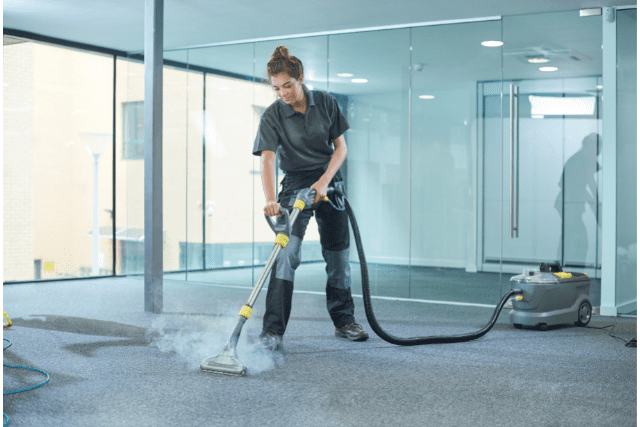
Professional methods include hot water extraction (steam cleaning), encapsulation, and very-low-moisture cleaning. Hot water extraction is highly effective but may require office downtime; plan deep cleans for off-hours or weekends.
Material-Specific Care: Carpet Fiber Types In Offices
Understanding fiber types helps you prevent damage and select the right products:
- Nylon: Very durable, responds best to hot water extraction and normal vacuuming.
- Olefin/Polypropylene: Resists stains, but can attract oils. Avoid high-heat methods.
- Wool blends: Use gentle, low-moisture methods and pH-neutral cleaners only.
Always confirm with your carpet’s supplier or maintenance documentation for any restrictions before applying treatments.
Addressing Odors and Allergens In Office Carpets
Carpets can harbor odors and allergens if not regularly cleaned. For offices in dense urban centers like Chicago, outside pollutants can exacerbate these issues.
- Vacuum with HEPA filters to capture small particles and allergens.
- Apply carpet-safe deodorizers designed for commercial environments.
- Deal with sources of moisture or humidity quickly to prevent mold growth.
For persistent issues, a professional inspection may reveal deeper problems requiring remediation.
Special Challenges: Office Carpet Care During Chicago Winters
Salt, moisture, and grime from boots are significant problems for Chicago office carpets during winter months. To mitigate winter-specific damage:
- Increase frequency of vacuuming and mat cleaning at entrances.
- Use rubber-backed mats to trap salt and moisture.
- Spot clean salt stains as soon as possible. A solution of water and white vinegar can help dissolve salt residues (test before using).
- Schedule an extra deep clean in early spring to manage salt buildup.
Keeping carpets clean during winter ensures a healthier and more attractive workspace throughout the year.
Integrating Carpet Care Into Overall Workplace Hygiene
Carpet maintenance should be an integrated element of your workplace’s overall cleanliness plan.
- Synchronize: Align carpet routines with cleaning of other high-touch surfaces as highlighted in resources like eliminating viruses and bacteria in the office.
- Train: Ensure staff is aware of both cleaning expectations and rapid spill response protocols.
- Audit: Regularly check for neglected areas, recurring stains, or maintenance lapses.
- Communicate: Keep employees informed on how their actions impact carpet longevity and hygiene.
Choosing A Professional Carpet Cleaning Partner
While everyday care can be handled in-house, periodic professional support yields noticeable results. When selecting an office carpet cleaning company, consider:
- Staff training and use of professional-grade equipment
- Experience with a range of office carpet materials
- Flexible scheduling to minimize business disruption
- Transparent pricing and clear communication on services included
- Commitment to hygiene standards and environmentally safe products
As outlined in key aspects about hiring an office cleaning service, relationships with reliable partners such as Quick Cleaning ensure long-term carpet and workplace health.
Office Carpet Maintenance Checklist For Facility Managers
- Daily vacuuming of entryways and main walkways
- Weekly spot checks and prompt stain treatment
- Monthly inspection for wear, fraying, and recurring stains
- Quarterly or biannual professional deep cleaning scheduling
- Review placement and cleaning frequency of entrance mats
- Update or retrain staff at least annually on stain response protocols
Creating a Culture of Cleanliness Among Office Staff
Long-term maintenance depends on employee cooperation. Foster a culture where everyone participates in keeping carpets clean:
- Orientation: Introduce carpet care practices in onboarding sessions.
- Reminders: Use friendly signage or emails to reinforce goals, especially after spills or inclement weather.
- Leading by example: Managers should adhere to the same standards as expected of staff.
Building a shared sense of pride in your office environment makes maintenance more sustainable.
Reducing Carpet Replacement Costs Through Proactive Care
Carpet replacement is a major business expense. Following the strategies above helps maximize your investment:
- Prolongs carpet life by minimizing irreversible wear and staining
- Reduces frequency of costly emergency cleanings or restoration
- Demonstrates care for employee and visitor wellbeing
- Helps maintain a positive image for clients and staff
Comparing Office Carpet Maintenance vs. Hard Floor Care
Confused about whether carpets or hard floors require more effort? Here’s a quick comparison:
- Carpets trap more allergens, requiring frequent vacuuming and spot treatment.
- Hard floors show dust and debris more easily, requiring daily sweeping or mopping.
- Carpet deep cleans are less frequent but more intensive, while hard floors may need regular polishing or waxing.
- Both demand entrance mats and routine checks for lasting performance.
Both options need dedicated upkeep as part of a smart facility management plan.
Adapting Office Carpet Maintenance For Special Spaces
Different offices in Chicago—from traditional suites to coworking hubs—face unique carpet care challenges:
- Multi-tenant offices: Need clear agreements with tenants for shared space care—see the multi-tenant office cleaning guide for collaboration strategies.
- Creative studios: May require more frequent stain checks due to art supplies or food events.
- High-security or medical offices: Extra attention to hygiene and decontamination processes.
Learning From Industry Standards and Best Practices
The carpet care recommendations above are consistent with standards adopted by the hospitality and facility management sectors. For more details on professional-level protocols, consult recognized authorities such as vacation rental cleaning guidelines (useful for Airbnb or short-term workspace turnovers) and Airbnb’s cleaning protocols.
Frequently Asked Questions About Maintaining Office Carpets
- How often should office carpets be professionally cleaned?
For high-traffic spaces, every 3-4 months; for typical areas, every 6-12 months. Adjust based on actual foot traffic. - What is the fastest way to deal with a coffee spill?
Blot immediately with an absorbent towel, then use a carpet-safe spot cleaner. Rinse with water and dry. - Will frequent vacuuming damage office carpets?
No—it removes abrasive soil particles. Use the correct vacuum setting for your carpet style. - Are DIY carpet cleaners safe for offices?
Some can be, but always test in inconspicuous areas and avoid overly wetting carpets, which can lead to mildew. - How can I prevent salt stains in winter?
Use durable entry mats, instruct staff to wipe shoes thoroughly, and spot clean with a vinegar solution as needed. - Which carpet type is best for busy offices?
Nylon is most durable and stain-resistant for high-traffic environments. Olefin is economical for lower-traffic areas. - What should be on our carpet cleaning checklist?
Regular vacuuming, immediate spot cleaning, periodic deep cleans, monthly inspections, and mat maintenance. - How can carpets impact workplace allergies?
Dirty carpets trap allergens; use HEPA vacuums and clean on schedule to reduce allergens in the office.
Summary and Practical Next Steps
Effective office carpet maintenance means blending smart daily routines, rapid stain response, preventative habits, material-appropriate care, and periodic professional deep cleaning. For Chicago businesses, adapting strategies for seasonal challenges and building a culture of workplace cleanliness delivers both immediate comfort and long-term savings. If your office needs specialized, reliable support for carpet or comprehensive cleaning, Office cleaning service keeps professional spaces at their best. For unique spaces, Quick Cleaning also offers multi-tenant solutions and commercial cleaning options. Keep your workplace healthy—carpet care is step one.
About Quick Cleaning
Quick Cleaning is Chicago’s expert in residential and commercial cleaning. We empower households, offices, landlords, and businesses to keep their spaces clean, healthy, and welcoming. Our trained staff follow strict checklists and quality standards, employing tailored products and advanced equipment for every surface, including office carpets. From recurring house cleaning to deep cleans, move-outs, and specialty facility cleaning, our transparent pricing and commitment to long-term client relationships sets us apart. Quick Cleaning helps households and businesses in Chicago, Illinois and nearby areas keep their spaces clean and healthy. Quick Cleaning brings a trusted, detailed approach to every project.

Top-rated doormats for durability, cleaning service in chicago, office cleaning chicago il, office clean chicago, Palatine office clean service, office cleaning Crest Hill, Markham office clean service, office cleaning Riverside, Elgin office cleaning, office cleaning in Elmhurst IL, office cleaning Des Plaines IL