The Transformative Benefits of Using Chemical-Free Cleaning Products
For anyone seeking a truly healthy, safe, and sustainable environment, the choice of cleaning products has never been more important. Whether you’re a homeowner, property manager, business owner, or an Airbnb host in Chicago, understanding the benefits of using chemical-free cleaning products will help you protect both your property and everyone who enters it. In this comprehensive guide, we’ll dive into what chemical-free cleaning really means, its measurable advantages over traditional cleaning strategies, how QUICK CLEANING implements eco-conscious products, and the steps you can take to make your space both dazzlingly clean and non-toxic. By the end, you’ll have a clear framework for evaluating products, services, and everyday routines to support a truly healthy environment.
What Are Chemical-Free Cleaning Products? Clarifying the Meaning
The term “chemical-free” often sparks debate. Technically, every substance is made of chemicals, but in the cleaning industry, “chemical-free” products refer to those free from harsh synthetic compounds such as chlorine bleach, ammonia, phthalates, parabens, and volatile organic compounds (VOCs). Instead, these products utilize safer, natural, or plant-based ingredients designed to minimize health risks and environmental harm.
- Typical chemical-free ingredients: vinegar, baking soda, citric acid, castile soap, essential oils, plant-derived surfactants.
- What they exclude: harsh disinfectants, strong solvents, synthetic fragrances, and artificial dyes.
For a deeper look at safe cleaning alternatives, see Ecological Alternatives For Cleaning Products.
Health Advantages: Protecting People Through Non-Toxic Cleaning
Switching to chemical-free cleaning is more than a trend—it has concrete benefits for physical wellness. Sensitive individuals (such as children, the elderly, or those with asthma/allergies) especially stand to gain.
- Improved indoor air quality: Eliminates the volatile compounds common in synthetic cleaners, reducing respiratory irritation. Studies by the CDC confirm that regular exposure to strong cleaning agents can trigger or exacerbate breathing difficulties (CDC Guidance).
- Reduced risk of skin and eye irritation: Fewer abrasive ingredients means lower chances of rashes and allergic reactions.
- Safer surfaces for children and pets: No lingering toxic residues left behind on toys, floors, or furniture.
- Less likelihood of accidental poisoning: Especially critical in homes, daycares, and healthcare settings.
Environmental Gains: Lowering Your Cleaning Footprint
Using chemical-free cleaning products is central to the environmental mission of companies like QUICK CLEANING. This approach yields several eco-benefits:
- Decreased water and soil pollution: Non-toxic products break down more easily and are less likely to contaminate waterways.
- Reduced impact from manufacturing and disposal: Many conventional cleaners produce hazardous waste in production and after use.
- Lower packaging waste: Many green products use minimal or recyclable packaging, reducing landfill burden.
- Support for sustainable sourcing: Plant-based products often require less energy and fewer resources to produce.
Explore more environmental cleaning tips in Eco-Friendly House Cleaning Tips.
Comparing Chemical-Free vs. Conventional Cleaning Products: Safety, Results, and Myths
Many people wonder: Do green cleaning options really work as well as traditional ones? Here’s a side-by-side structured comparison:
- Effectiveness: Most chemical-free cleaners handle everyday dirt, dust, and minor stains with equal or better results than chemical cleaners.
- Sanitization: Some natural agents (like vinegar or hydrogen peroxide) have proven antibacterial properties, though for medical-grade disinfection, check for EPA-registered products.
- Cost: While “green” labeled products may carry a price premium, many DIY chemical-free options are affordable and accessible.
- Allergy/asthma safety: Chemical-free cleaning dramatically lowers risks from irritants and fragrances.
For people managing allergies, see Most Common Allergens at Home.
How QUICK CLEANING Implements Non-Toxic Cleaning Approaches
At QUICK CLEANING, all staff receive training in both conventional and chemical-free cleaning strategies to ensure our protocols support the task and client health needs. Here is how our approach stands out:
- We use product-specific checklists to select plant-based cleaners for kitchens, bathrooms, and high-touch surfaces.
- Our team employs microfiber cloths to minimize chemical reliance and maximize dirt capture (learn more by visiting Advantages of Using Microfiber Cloths to Clean).
- Flexible scheduling is available for recurring, deep, and emergency needs, ensuring products suit each environment.
- Transparent communication and safety standards guide product selection—and clients can always request 100% chemical-free cleaning.
Expert Checklist: Transitioning Your Cleaning Routine Away from Chemicals
- Audit your current cleaning products and check for ingredients like ammonia, chlorine, or synthetic fragrances.
- Replace multipurpose sprays with natural alternatives (such as a vinegar-based or plant soap blend).
- Switch to reusable, machine-washable microfiber or cotton cloths.
- Adopt a room-by-room strategy—e.g., baking soda for bathrooms, castile soap for floors.
- Store green cleaning supplies safely and mark refilled containers clearly.
- Request eco-friendly service options from your cleaning provider or hire one with transparent product policies.
Understanding Ingredient Labels: What to Avoid vs. What’s Acceptable
Even so-called “natural” cleaners can sometimes contain potentially concerning substances. Use this guide to smart label reading:
| Ingredient | Risk/Concern | Safer Alternatives |
|---|---|---|
| Chlorine bleach | Eye/lung irritation, pollutant | Hydrogen peroxide, vinegar |
| Ammonia | Toxic fumes, skin burns | Baking soda, castile soap |
| Phthalates | Hormone disruption | Essential oils (with caution) |
| Formaldehyde | Carcinogen | Citrus extracts |
| Sodium lauryl sulfate | Skin/eye irritation | Coco-glucoside, decyl glucoside |
Check out more on substances to steer clear of at Chemicals To Avoid When Cleaning.
Allergy and Asthma Considerations with Chemical-Free Cleaning
Individuals with respiratory sensitivities typically fare much better with non-toxic cleaning products. Fragrance-free or verified hypoallergenic solutions reduce airborne triggers and residue.
- Dust and dander removal is safest using water-based, non-scented cleaners and high-filtration vacuums.
- Essential oils (even natural) can still irritate some users—select unscented options for sensitive households.
- Staff at QUICK CLEANING are trained to identify allergy triggers and recommend suitable options for each space.
To further limit allergens, review Tips to Eliminate Dust at Home.
Regulatory Standards: What Makes a Cleaner “Green” or “Safer”?
In the U.S., there is no single, comprehensive “green cleaning” standard, but several respected organizations offer certifications. The EPA Safer Choice program labels cleaning products meeting stringent safety and environmental criteria. Look for this (or similar) marks as a quick reference for selecting genuinely chemical-free products.
- Safer Choice and Green Seal are among the most widely recognized labels.
- Always check for third-party validation rather than just marketing claims.
Addressing Common Misconceptions About Chemical-Free Cleaning
Myth 1: “Green cleaning never disinfects as well as chemicals.” — In routine situations, plant-based or alternative agents often suffice, particularly for non-medical spaces. For higher-level sanitization, opt for EPA-listed products only when appropriate.
Myth 2: “It’s too expensive or impractical.” — Many chemical-free ingredients are affordable household staples. Most clients find cost comparable or even lower over time due to reduced need for specialty products.
Myth 3: “Natural automatically means safe.” — Always read the label; some plant-based compounds can still cause allergic reactions.
Find more insight in Common Myths About Home Cleaning.
Professional Green Cleaning: Service Differences and What to Ask Providers
- Check whether companies use EPA Safer Choice or Green Seal certified products.
- Review their checklists and inquire about alternatives for sensitive clients.
- Ensure providers have staff training in green cleaning protocols and product-safe usage.
- Inquire about cross-contamination procedures to avoid reintroducing allergens or irritants.
For apartment dwellers and Airbnb hosts, see House Cleaning Supplies & Products Checklist.
Case Studies: Chemical-Free Cleaning Successes in Chicago Homes & Businesses
- Residential homes: Families with young children and pets report fewer colds and less irritation after switching to non-toxic cleaners for floors, counters, and bathrooms.
- Offices: QUICK CLEANING clients have shared improved employee satisfaction and productivity, referencing better air quality and no lingering odors in work environments.
- Short-term rentals: Several Airbnb hosts highlight fewer guest complaints about cleaning odors or skin reactions after service swaps to all-natural methods.
Building a Chemical-Free Cleaning Kit: Essentials for Every Room
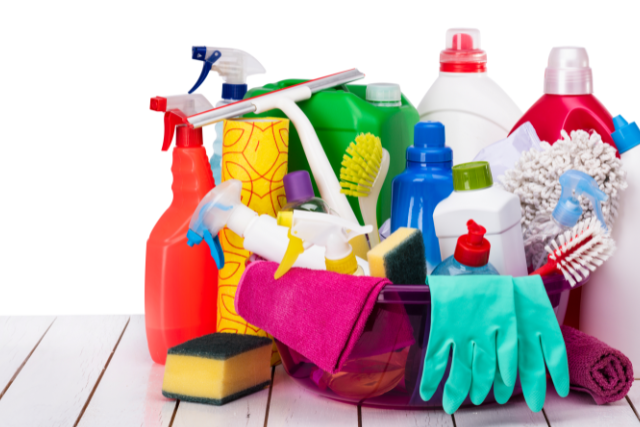
- White vinegar (glass, kitchen, bathroom surfaces)
- Baking soda (scrubbing, deodorizing carpets/mats)
- Unscented castile soap (general multi-surface cleaning)
- Reusable spray bottles
- Microfiber cloths and mop heads
- Hydrogen peroxide (non-chlorine bleaching for laundry)
- Lemon juice (stain removal, deodorizing)
For seasonal refreshes and tips, view Spring Cleaning Tips for Your New Home.
Cleaning High-Touch and Sensitive Areas Safely
Certain areas require extra care:
- Kitchens: Natural degreasers like citrus-based products and baking soda mixtures cut through grime without leaving residues near food prep spaces.
- Bathrooms: Use hydrogen peroxide or vinegar with baking soda as a scrub on sinks and tiles, carefully avoiding grout damage.
- Children’s rooms/toys: Stick to fragrance-free, non-toxic cleansers and rinse thoroughly.
- Electronics/high-tech items: Dry microfiber and distilled water only—no solutions needed.
Adapting Chemical-Free Approaches for Special Facilities
Every space has unique demands. QUICK CLEANING adjusts its product selection and methods for offices, gyms, daycare centers, and retail by:
- Verifying with clients if chemical sensitivities exist among occupants or visitors.
- Customizing product ratios and spot-testing whenever new solutions are required.
- Regularly updating protocols based on the latest public health guidance, relying on CDC and EPA research for product validation.
When Chemical-Free Isn’t Enough: Recognizing Situations Needing Stronger Action
Routine cleaning in most homes and offices can rely on green methods; however, some situations demand stronger intervention:
- After illness outbreaks or contaminations, hospital-grade sanitizers (preferably EPA Safer Choice) may be required.
- Deep mold infestations or hazardous spills call for expert intervention with appropriate PPE and precautionary chemicals.
- If odors or stains are not eliminated with chemical-free means after repeated attempts, consult with professional cleaners for safe escalation.
QUICK CLEANING always informs clients when additional measures are recommended, maintaining full transparency about product use.
Maintaining Long-Term Success with Chemical-Free Cleaning
- Reinforce daily and weekly routines to keep buildup at bay (see House Cleaning Schedule).
- Store all-natural cleaning supplies out of direct sunlight and heat.
- Educate everyone in the home or workplace about safe usage and label reading.
- Schedule periodic professional cleanings with companies who offer green product options.
Frequently Asked Questions: Chemical-Free Cleaning in Professional Environments
Is chemical-free cleaning as effective as using traditional cleaners?
For daily cleaning and most bacteria removal, yes. For heavy disinfection, opt for EPA-approved products.
Are chemical-free products really safer for pets and small children?
Yes, they reduce the risk of toxic exposure—just ensure all ingredients are pet/child safe and properly rinsed.
How can I be sure a company uses non-toxic products?
Ask for product labels, certification details, and staff training specifics. Companies like QUICK CLEANING are transparent about their cleaning agents.
What should I avoid when shopping for green cleaners?
Beware of greenwashing—read labels for hidden irritants (e.g., sodium lauryl sulfate, “fragrance”).
Can chemical-free cleaning remove tough stains and odors?
Most routine stains and odors can be addressed. For persistent issues, combine methods or consult a professional.
Will using non-toxic products help if there are allergies in my household?
Yes. Reduced irritants and fragrance-free products often mean fewer allergy triggers.
Is it more expensive to maintain a chemical-free routine?
Not necessarily—bulk staples and concentrates may decrease long-term costs.
What certifications should I look for on cleaning products?
EPA Safer Choice and Green Seal are both reputable markers for eco-conscious consumers.
Does QUICK CLEANING offer chemical-free cleaning for offices and commercial buildings?
Yes, we tailor our protocols and products to suit the needs of apartments, offices, Airbnb properties, and specialty commercial spaces.
What happens if chemical-free cleaning isn’t enough?
We’ll discuss safer, effective alternatives with you and never use harsh products without your clear consent.
Summary and Next Steps for a Healthier, Greener Clean
Embracing the benefits of using chemical-free cleaning products safeguards your health, improves indoor air quality, protects vulnerable individuals, and minimizes environmental harm. By adopting a mindful approach—auditing your supplies, educating yourself on ingredient labels, and partnering with informed professionals like QUICK CLEANING—you create a truly healthy living or working space. For professional solutions in Chicago, explore office cleaning service or arrange Airbnb cleaning that fits your green values. Your environment will thank you—and so will everyone who steps inside.
About QUICK CLEANING
QUICK CLEANING is committed to creating safer, healthier spaces for Chicago households and businesses. We specialize in recurring house cleaning, deep cleaning, move out cleaning, office cleaning, and specialized facility cleaning—always emphasizing non-toxic solutions when possible. Our team of trained professionals employs thorough checklists and transparent communication, tailored for both homes and commercial environments. Serving Chicago, Illinois, and surrounding communities, QUICK CLEANING helps property owners experience the benefits of truly clean, healthy environments—every day.
green products, chicago cleaning company, house cleaner near me, house cleaner chicago, house cleaning in Algonquin IL, house clean service Skokie, Evanston house cleaning, house cleaning company Loop, house clean in Bedford Park, house clean service Hanover Park IL, best house cleaning Elmhurst